Beautiful, affordable – but legal?
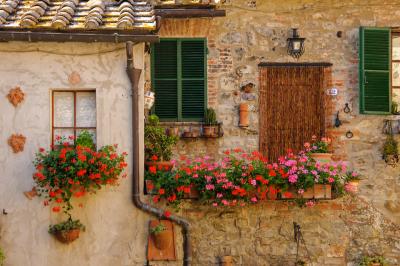
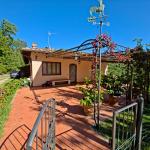
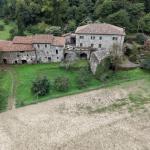
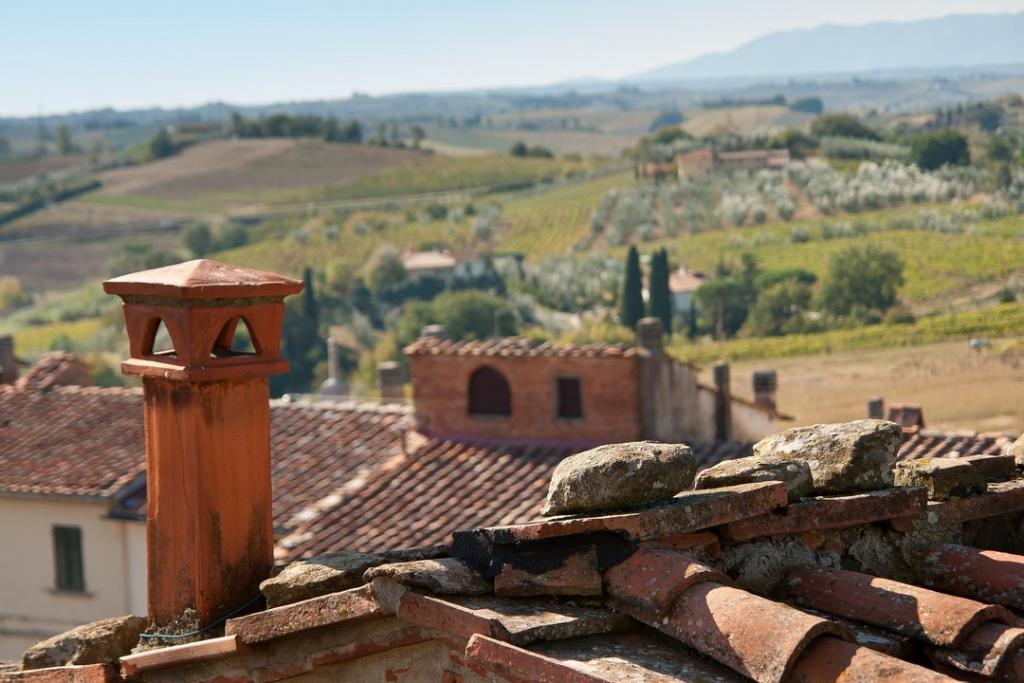
The stone house overlooks the vineyards, the price would be unimaginable in Germany, and the terrace offers sea views for the price of a mid-range car. Your first encounter with an Italian property is rarely a matter-of-fact affair. It’s only later – often just before you sign on the dotted line – that the truly crucial question arises: is the building authorised to stand exactly as it does before you today?
In Italy, this question is anything but rhetorical. Unauthorised extensions, swimming pools that never appear in the land registry, floor plans that haven’t reflected reality for decades – none of this is the exception, but rather the rule in large parts of the country. Anyone buying against this backdrop without having checked the relevant documents risks more than just a headache: You face the risk of fines, restrictions on use or, in the worst-case scenario, being unable to resell a property that, formally speaking, cannot be sold at all.
The following overview explains the twelve documents and points to check that should be on the table before any purchase of Italian property. It is no substitute for individual legal advice, but it provides the basis for discussing matters with a notary and a surveyor on an equal footing.
Visura catastale – the cadastral extract
The Visura catastale is the official extract from the Italian property cadastre, the Catasto. It shows who is currently registered as the owner and the category into which the building has been classified. It also indicates the category into which the building has been classified. It also shows the amount of the so-called ‘rendita catastale’ – that notional income value which serves as the basis for numerous taxes, from the IMU to notary fees.
This document is the obvious first step, as it can be easily obtained online from the Agenzia delle Entrate without the seller’s consent. However, it only shows the formal status – not whether this corresponds to reality. This is precisely why the following documents are needed.
Planimetria catastale – the cadastral plan
The Planimetria catastale is the floor plan of the property held on file with the Land Registry: room layout, square metre measurements, and the location of doors and windows. In practice, this plan surprisingly often no longer corresponds to the actual condition of the house – a wall that has been moved, a converted loft or a bricked-up window is enough to cause discrepancies.
This discrepancy is not a minor issue. It affects what is known as ‘conformity’, which in turn is legally binding for the entire purchase process.
Atto di provenienza – the proof of origin
The Atto di provenienza documents how the current owner acquired the property: through purchase, inheritance or gift. In the case of an inheritance, it is worth taking a closer look, particularly if there were several heirs involved or if the succession has not yet been fully recorded in the land register. Unresolved inheritance shares are among the most common reasons why a sale in Italy can unexpectedly drag on or fail altogether.
Conformità catastale – Conformity with the Cadastral Register
Since 2010, Conformità catastale – the conformity between the planimetric drawing and the actual state of the building – has been a legal requirement for notarisation. Without this confirmation, the Rogito, the actual contract of sale, may not generally be signed.
If, prior to notarisation, it transpires that the plans and the actual building differ, this discrepancy must first be rectified. This can be done either by formally amending the plans or, in the case of significant structural alterations, through a more complex planning approval process. This clarification should always take place before the contract is signed, not afterwards.
Conformità urbanistica – Compliance with the local authority’s building plans
Whilst ‘Conformità catastale’ relates to the land registry, ‘Conformità urbanistica’ checks whether the building complies with the building documents filed with the local authority (Comune) – such as the original ‘Permesso di costruire’. These two levels – the land registry and the local authority – are organised separately in Italy and do not automatically correspond. A house may be correctly registered in the land registry yet still pose a problem under building regulations if the local authority has approved a condition that differs from the one that exists.
Agibilità – the certificate of occupancy
The Certificato di Agibilità confirms that a building is fit for habitation from a structural, health and safety perspective. If this document is missing, it can prove problematic not only when renting out the property, but also when accessing certain grants or loans. The Agibilità is surprisingly often missing, particularly in the case of older country houses and rustici that have been informally renovated over the years. This is an issue that can usually be resolved retrospectively, but it involves time and additional costs.
Energy Performance Certificate (APE)
The Attestato di Prestazione Energetica, or APE for short, has been mandatory in Italy for several years and must be provided to the buyer by the time the contract is signed at the latest. It classifies the building according to energy efficiency classes, like the German energy performance certificate, and is increasingly influencing financing terms, particularly when applying for energy efficiency grant schemes.
Mortgages and Encumbrances
Before any purchase, you should check whether the property is subject to an ‘ipoteca’ – a mortgage in favour of a bank or other creditor – or whether there are any other registered encumbrances. This check is carried out via the Land Registry, the Conservatoria dei Registri Immobiliari, and must be conducted independently of any information provided by the seller. An existing mortgage does not automatically mean that a purchase is out of the question. However, it must be discharged before the deed is drawn up or considered accordingly in the purchase price.
Rights of way (Servitù di passaggio)
Particularly in the case of country houses accessible via private driveways or shared paths, it is worth taking a close look at any existing ‘Servitù di passaggio’ – rights of way benefiting or encumbering the property. Such rights are legally binding, even if in everyday practice they are often handled only verbally. In the absence of clear regulations, this can lead to disputes with neighbours later – an issue that occurs far more frequently in rural areas than many buyers expect.
Unauthorised extensions
Abusi edilizi, or unauthorised structural alterations, are widespread in Italy – ranging from a veranda that has been glazed in retrospectively to a converted basement. Some of these discrepancies can be resolved through a so-called ‘condono edilizio’, a form of retrospective legalisation, whilst others cannot. It is crucial to identify any discrepancies between the approved plans and the actual structure before purchasing, and to discuss with the surveyor what options are available and what costs this entail.
Swimming pool, garage and outbuildings
What surprises many buyers is that: in Italy, a swimming pool, garage, garden shed or tool shed requires its own separate planning permission. It is not uncommon for the main house to be entirely legal, whilst the swimming pool in the garden or the garage has never been officially approved. These outbuildings should therefore be examined just as carefully as the main building itself, as they may otherwise lead to subsequent conditions or fines.
The role of the geometra and the notaio
Two professional groups play a central role in this entire verification process. The geometra, a surveying and building expert firmly established in Italy, inspects the structural and cadastral condition of the property on site and establishes the ‘conformità catastale’ and – where necessary – the ‘conformità urbanistica’. They are usually the first point of contact when discrepancies between the plans and the actual situation are identified.
The ‘Notaio’, or notary, is responsible for the actual contract of sale, the ‘Rogito’, and checks the legal aspects: ownership structure, encumbrances and the completeness of the documentation. Unlike in Germany, the Italian notary represents both contracting parties equally by law; they are neutral but do not replace independent legal advice, particularly for foreign buyers who are unfamiliar with the Italian system. Many international buyers therefore also engage an independent avvocato who represents their interests exclusively.
A real-life example
Imagine a stone house in the hills of the Maremma, with three bedrooms, an olive grove and a small swimming pool which, according to the seller, ‘has always been there’. At the first viewing, everything seems in order: the house is lived in, well-maintained and the price is attractive. It is only during the on-site inspection that the surveyor discovers that the swimming pool was never registered in the land registry and that no planning permission for it exists with the local council. Added to this is a converted loft, which is still listed on the cadastral plan as an unused storage space.
Both issues can be resolved in this case, but not without time and expense: retrospective legalisation of the pool and an amendment to the planimetric survey for the loft. Anyone who only finds this out after signing the ‘compromesso’ suddenly faces renegotiation, whilst the deposit has already been paid. Anyone who knows this in advance can adjust the purchase price accordingly or require the seller to take care of the legalisation themselves before the deed is notarised. It is precisely this difference in timing that makes the entire document check worthwhile.
Regional differences you should be aware of
Not every region in Italy deals with these issues in the same way. In Tuscany, where landscape conservation and building regulations are traditionally enforced strictly, many local authorities scrutinise planning applications and retrospective legalisation particularly closely. On the one hand, this can mean longer procedures; on the other, however, it also creates a more reliable situation once a property has been confirmed as compliant.
In more southerly regions such as Apulia or Calabria, where there has been significantly more informal building in recent decades, unauthorised extensions are more common. At the same time, however, the procedures for retrospective legalisation are well established and comparatively well documented in many cases. Anyone considering a property outside the traditional Tuscany region should be aware of this regional difference. Ideally, the inspection by a locally experienced surveyor (geometra) should not be replaced by an expert from another area. Ideally, the inspection should be carried out by a locally experienced surveyor (geometra) and not replaced by an expert from another area.
What the inspection typically costs
For international buyers, the question of what additional costs are associated with the entire document check arises early on. The fee for a ‘geometra’ to carry out a full technical inspection, including ‘conformità catastale’, usually ranges from several hundred to just over a thousand euros, depending on the region and the size of the property. An independent avvocato, who reviews the legal aspects for the buyer in addition to the notary, often charges a fee as a percentage of the purchase price or as a flat rate, depending on the complexity of the case and the law firm.
At first glance, these costs may seem like an additional burden, but they should be considered in relation to the overall risk. The subsequent legalisation of an unauthorised extension, a legal dispute over an unclear right of way, or the discovery of an existing mortgage after the deed has been notarised will generally cost many times more than what the preliminary check would have cost.
The timeline in practice
A realistic timeframe for a full document check is between two and six. This depends on how thoroughly the seller’s documents have already been prepared and how quickly the relevant local authority responds to enquiries. The cadastral survey (Visura catastale) and site plan (Planimetria) can usually be obtained within a few days; the on-site inspection by the surveyor (Geometra) takes between one and several days, depending on the size of the property; whilst research into mortgages and encumbrances via the Land Registry (Conservatoria dei Registri Immobiliari) can also be carried out swiftly.
The process becomes more time-consuming as soon as discrepancies are identified that require clarification with the local authority. Depending on the region and the workload of the relevant authorities, this can take several weeks to months. Those who factor in this potential time commitment from the outset will not come under unnecessary pressure later to sign a preliminary contract before all outstanding issues have been resolved.
Typical warning signs during a viewing
Even during the first viewing, there are some clues that may point to problems down the line. A swimming pool or a garage that looks significantly newer than the main house warrants a specific enquiry about the relevant planning permission. Rooms whose use does not fit with the original building style – such as a loft converted later with modern windows in an otherwise historic building – are another indication. Unusually hesitant or evasive answers from the seller to specific questions about planning permission should also be seen as a reason for a particularly thorough check, not as a minor issue.
These observations are no substitute for a technical survey. However, they do help to assess at an early stage how much effort the subsequent clarification with the surveyor and notary is likely to require. They also help to assess whether this effort is even worthwhile, given the property’s location, price and your personal plans for it.
Why this check must take place before signing
The key difference compared to the German property market lies in the timing. Whilst many buyers from German-speaking countries are accustomed to broad legal issues being clarified during the notarial certification process, the Italian process requires significantly more initiative on the buyer’s part in the run-up to the transaction. A preliminary contract, known as the ‘compromesso’, is often signed before all twelve points have been fully checked – with a deposit, the ‘caparra’, already paid, which cannot easily be reclaimed in the event of a dispute.
The sensible sequence is therefore as follows: the Visura and Planimetria first, then an on-site inspection by an independent Geometra, and only then the signing of a preliminary contract – ideally with a clause that expressly makes the purchase conditional upon the property’s full compliance.
Frequently asked questions about document checks when buying a house in Italy
Which documents do I need to check before buying a house in Italy?
The required documents include, at a minimum, the Visura catastale, the Planimetria, the Atto di provenienza and proof of compliance with the cadastral and town planning regulations. In addition, the Agibilità, the energy performance certificate and a check for mortgages, rights of way and unauthorised extensions are required, as is proof of compliance with the cadastral and town planning regulations.
What happens if the floor plan (Planimetria) does not match the actual condition of the building?
Any discrepancies must be resolved before the notarial deed is drawn up, either by amending the cadastral plan or, in the case of significant alterations, by applying for planning permission from the local council.
Do I need my own solicitor in addition to the notary?
The Italian notary represents both parties impartially. Foreign buyers therefore often engage an independent solicitor (avvocato) who represents their interests exclusively.
Are the swimming pool and garage automatically approved as part of the house?
No. Outbuildings such as a swimming pool, garage or garden shed require separate planning permission in Italy and should be checked individually.
When should these documents be checked?
Ideally before signing the preliminary contract (Compromesso), as any deposits already paid are difficult to reclaim in the event of a dispute.
This overview is not a substitute for individual legal or tax advice. ItalicaHomes supports you throughout the purchase of an Italian property and, if required, puts you in touch with local surveyors, notaries and independent legal advisers.