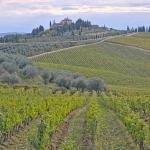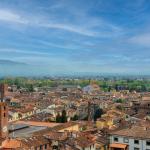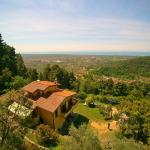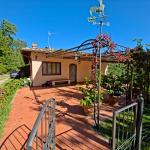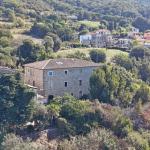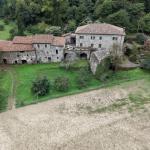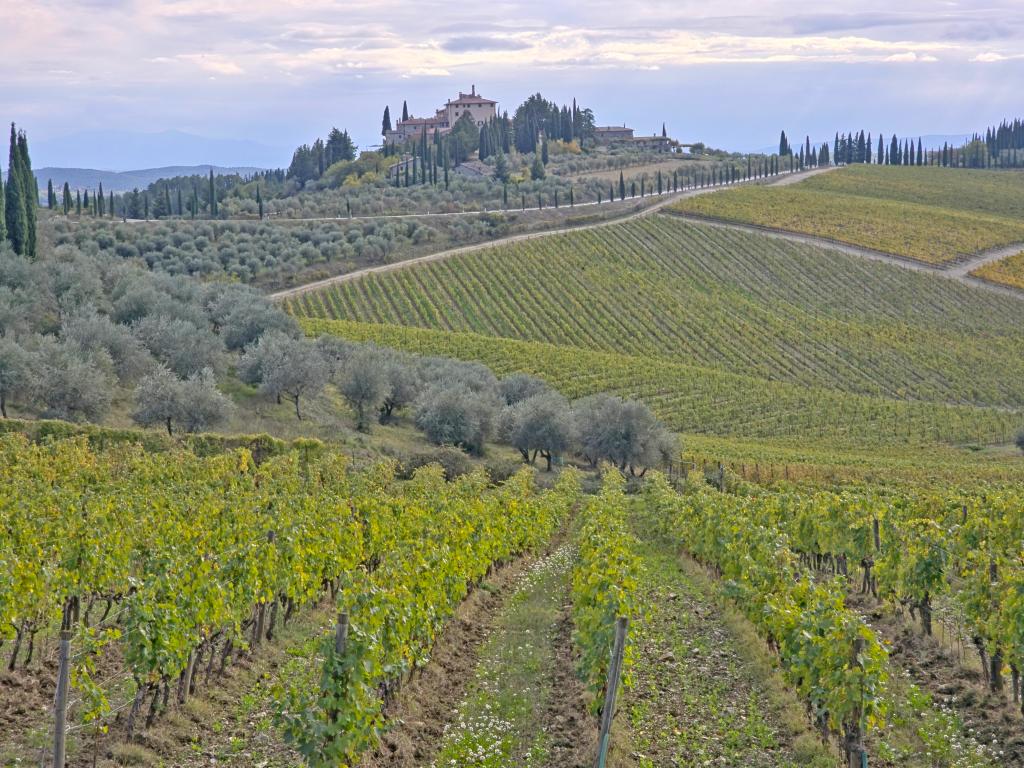
A secluded spot or a village?
“Tuscany or Umbria?” is, quite frankly, almost never the question that ultimately determines how satisfied you’ll be with a second home. The question that really matters is more like this: what happens if you arrive in November rather than August? Who will open the door if a pipe bursts whilst you’re in Dortmund? And does the internet reach your property, or only your neighbour’s three bends down the road?
This is precisely the point I always return to in my consultations. Buyers come to me having already decided on a region – and only realise this later. Furthermore, mobile phone reception should be tested in several rooms and in the garden using your own device. It’s worth bearing in mind that the original decision was a different one: a house in a village or in a secluded location. Both options have their appeal, and both come with ongoing costs that are rarely mentioned in glossy property brochures.
The key point: privacy comes at a price, and so does proximity.
If I had to sum it up in one sentence, it would be this: a secluded location buys you privacy, a village location brings you proximity – and both come at a price, though not necessarily in euros. For a second home, there’s another factor to consider that hardly comes into play with a holiday home used for just two weeks a year: What happens during the months when nobody is in the house, and how does the picture change if you arrive in the middle of winter rather than in the height of summer?
To make the decision more tangible, it’s worth looking at the criteria that make a difference in practice:
| Criterion | Secluded location | Village or village outskirts | What to look out for before buying |
| Peace and privacy | Usually the biggest advantage if the access road and surroundings are genuinely quiet | Neighbourhood noise, church bells, restaurants or through traffic may be audible | visit at different times of day; don’t base your decision solely on photos
|
| Daily life without a car | Generally difficult | More feasible in a functioning village | Check actual footpaths and opening hours, not just the distance as the crow flies |
| Shopping and healthcare | Transport links and a functioning access road are particularly important | Basic amenities are often closer, but this isn’t guaranteed | Check journey times to supermarkets, pharmacies and doctors’ surgeries that are open all year round |
| Internet and mobile coverage | Heavily dependent on the address | availability isn’t guaranteed either. | Check coverage at the property, the number of networks available, and signal strength inside the building |
| Garden and outdoor space | More space, but also more maintenance required | less space, often less effort required | Factor in watering, trees, retaining walls and waste disposal |
| Access to the property whilst you’re away | Access for maintenance and tradespeople must be organised. | Neighbourhood and local service providers are often easier to reach. | He checks the roof, water supply and heating – but at what cost? |
| Access | Private road, slope or road conditions can be critical. | Often easier, but historic alleyways can be narrow. | Check right of way, road maintenance and access after heavy rain |
| Natural hazards | Consider the plot and access route separately | even village houses may be situated by a stream or on a slope | Check hazard maps for the house and access route, not just for the region |
| Building freedoms | Greater distance does not automatically mean greater freedom from planning permission | Historic town centres may restrict alterations | . Have the planning file and conditions professionally assessed before purchase |
| Rental/resale: | A specific target audience; a beautiful location alone does not guarantee demand. | Everyday amenities appeal to a broader range of users | Examine local comparable properties and actual demand
|
I am deliberately being this direct: this table describes typical decision-making criteria, not statistically proven superiority of one property types over another. It is no coincidence that journey time to services is a criterion in its own right – Italy’s statistical office, ISTAT, explicitly distinguishes municipalities in its classification of so-called ‘Aree Interne’ based on accessibility to centres offering healthcare, education and transport services. According to this, ‘intermediate’ municipalities are situated approximately 21 to 40 minutes’ drive from such a centre, peripheral ones 41 to 75 minutes, and particularly peripheral ones more than 75 minutes. These are categories of municipalities, not a guarantee of journey times for an individual house – but a useful indication of just how different two villages can be, even if they look almost identical on the map.
The underestimated third way
Rather than a blanket statement that “the village is better”, I would advise you to think in terms of three realistic location types, not two:
The historic village centre brings you close to local life, but often also means narrow lanes, stairs and limited parking – and the infrastructure there is frequently seasonal. The outskirts of a village or a small hamlet combines privacy and some outdoor space with manageable distances – for many of our clients, this is the most appealing compromise. And a truly secluded location offers maximum independence in terms of lifestyle, but also greater reliance on a car, technology and reliable local people.
These are search profiles, not verified market categories, but they help to translate a vague gut feeling into a concrete search. For many people looking for a second home they’ll use regularly, the outskirts of a village are the type of property where we hear the fewest reports of unpleasant surprises.
Five everyday checks before you commit
Accessibility – minutes rather than kilometres
For weekend use from Germany, a longer journey can significantly cut into the actual time spent on site. You should therefore measure the actual journey time from the property to the supermarket, chemist’s, medical facilities, railway station, airport and the nearest major town. Questions I ask everyone during a viewing: Is the final stretch of road easily passable even with a fully loaded car? Who maintains the private access road, and is this specified in the contract of sale? Is there an alternative if the access road is blocked after heavy rain? Can delivery services, tradespeople and, if necessary, the emergency services reach the house? And perhaps the most pressing question: is the location still supplied with food and services in January – not just in August?
Access via someone else’s land should never be based solely on a verbal agreement. A notary and, if necessary, a solicitor should check the ownership and right-of-way situation against the actual documents – a cadastral map and the path used are not automatically the same in legal terms.
Internet – it’s the address that counts, not the village
‘Fibre-optic in the village’ does not guarantee a fibre-optic connection at the country house – it’s as simple as that. The Italian communications regulator AGCOM offers a way to check available access technologies right down to the individual address via its Broadband Map. This is a helpful preliminary check, but it does not replace actual confirmation from the provider and an on-site reception test. Anyone wishing to work from there or stay for extended periods on a regular basis should enquire about – or measure themselves – download and upload speeds as well as connection stability; test mobile reception in several rooms and in the garden using their own device; and not be too quick to assume that satisfactory regional coverage automatically applies to that particular house.
That is precisely why the map was created in the first place – to highlight differences that a postcode alone conceals.
Absence – who looks after the property when nobody is there?
This is the factor that is simply missing from most buying guides, because it hardly plays a role in the case of a traditional holiday home for a two-week summer holiday. With a second home, however, it certainly does. A property that is only used occasionally needs a realistic management plan: who checks on it between stays, and how often? Who notices a leaking roof, a faulty pump or a power cut – and how quickly can that person get there? Who lets tradespeople in and records what work has been done? Who empties the letterbox, tends to the garden or looks after the pool?
I wouldn’t give you a flat-rate figure in euros for this work – the costs depend too much on the house, the plot, the pool and the scope of services chosen. In any case, a comparison that you should draw up yourself for your property is more helpful than an unsubstantiated figure: purchase price versus annual maintenance costs.
Risk assessment – consider the house and the access route separately
For an initial assessment of landslide and flood risks, the Italian environmental agency ISPRA provides an address-based map via IdroGEO. A match on the map is neither a comprehensive assessment nor proof that the entire plot is affected – if the property is on a slope, near a stream or has retaining walls, a specialist individual assessment is still required. Earthquake risk also varies from region to region, with higher levels of risk in areas such as the Apennines, Calabria and eastern Sicily, although no municipality is entirely exempt. When it comes to buying a property, what ultimately matters less is the abstract hazard zone and more the question of exactly how and when this house was built and subsequently altered.
That romantic access road through a stream bed or along a hillside might make for an enchanting photograph in September. For a second home, however, what matters is whether it remains passable after an autumn downpour.
Overall budget – location entails follow-on costs
A secluded location may seem attractive in terms of price, but a ‘low purchase price’ and an ‘affordable second home’ are two different things. With a remote house, access, the land, water supply, sewage, the heating system, the garden and maintenance can incur significant individual costs. In a village, on the other hand, communal charges, parking, the historic fabric of the building or alterations requiring planning permission can add up. This is a checklist for your own calculations, not a blanket statement that one of the two types of location is inherently more expensive.
One point that many people only consider at a late stage: When purchasing a residential property from a private individual without the relevant ‘Prima Casa’ benefits, according to the Agenzia delle Entrate, a 9 per cent registration tax is generally payable, along with 50 euros each for mortgage tax and cadastral tax – the basis of assessment and the so-called ‘prezzo-valore’ rule must be checked on a case-by-case basis, and a lovely second home does not automatically qualify for ‘Prima Casa’ benefits.
The 48-hour reality check
The most honest advice I can give you here is not another list of fabulous regions. Instead, I recommend you carry out a practical test on the ground – an editorial suggestion, not an official procedure, but one that has proven its worth in practice.
Arrive on a normal weekday, not for a staged viewing, and drive the final stretch of road yourself – not in the estate agent’s car. The next morning, test out real everyday life: coffee, groceries, the chemist, the nearest medical facilities, and ask about opening hours out of season. Spend a morning working from home: try a video call, check mobile phone reception, and cross-check the AGCOM details for that exact address. Stay for an evening too: lighting, noise levels, temperature, privacy, and the actual usability of the outdoor area. Talk to local people about water, summer heat, winter, rubbish collection, road maintenance and available tradespeople. And, if possible, plan to visit during a second season – a village in August and the same one in January can be two completely different places. For a second home, a single summer visit is a highly inadequate basis on which to decide.
Document review before signing
However, much gut feeling the practical inspection allows for, it is no substitute for a professional review of the documents. Before signing a binding contract, an independent surveyor or a comparable technical expert must be involved to check the condition of the building and to verify the cadastral and building records. I have described in detail how exactly this process works and what it involves in our article on the role of the surveyor when buying a house in Italy. At the same time, a notary or solicitor should clarify ownership, encumbrances, access and the terms of the contract. The Italian Notarial Association itself recommends involving the notary before making a binding offer or signing a preliminary contract – once the ‘compromesso’ has already been signed.
Frequently asked questions about remote locations and villages as second homes
Is a house in a village always more practical as a second home?
No. The key factors are year-round amenities, parking, access and the specific location. A house in an isolated spot near a small town with good amenities can be more practical than a village that is effectively deserted out of season.
Is a secluded location in Italy automatically cheaper?
No. Even if the asking price is lower, you must factor in the condition of the property, access, property management, water and drainage systems, the garden and day-to-day transport needs.
How do I check the internet connection at a country house before I buy?
AGCOM’s Broadband Map offers a preliminary check down to the individual address; before deciding, you should also have the provider confirm actual availability and test mobile coverage as well as the connection inside the building itself.
Which maps should I look at before buying?
IdroGEO from ISPRA for landslide and flood risks, as well as the seismic classification from the Italian Civil Protection Agency – both are good starting points, but they are no substitute for an inspection of the building’s structure and access by experts.
What is particularly important when it comes to a private access road?
Legally secure access permitted use and maintenance – not just the fact that a car was able to drive over it without any problems during the viewing. These documents must be submitted to a solicitor or independent legal adviser before any contract is signed.
Conclusion
If I were to give you just one lesson from this article, it would be this: There is no one-size-fits-all answer to the question of ‘secluded location or village’, and any guide that claims to provide one is oversimplifying matters. The reliable answer lies not in the region, but in driving times, the specific address, the documents – and in a realistic plan for the months when no one is on site. Take the time to address precisely these questions before committing to anything else.