Rent first, then buy?
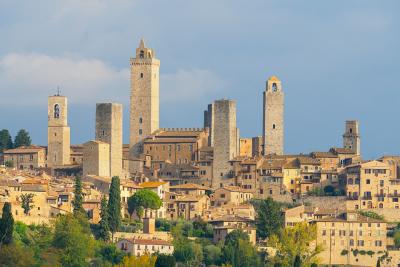
A phrase I’ve heard remarkably often in recent years goes something like this: “We’ve been there five times in August, it was wonderful, so now we’re buying.” Sometimes that works out well. But often enough, two years later, the same couple realise that November in Tuscany is quite different from August – grey, quiet, with a house that’s suddenly difficult to heat without the summer heat, in a village where, apart from the bar in the square, almost nothing is open in winter.
I’m not saying this to discourage people from buying. After all, I sell houses in Italy; that would be a rather strange business model. But hopefully part of my job is to rein clients in now and then, when I realise they’ve fallen in love with a week’s holiday rather than a life in that house. It’s precisely for cases like this that a trial year is often the wiser first decision – not as a delaying tactic, but as a sort of reality check that you’ll be spared later if it’s taken place beforehand.
Why a summer holiday is the worst guide
August in Italy is an exceptional situation, not the norm. The days are long, the restaurants are packed, the atmosphere is euphoric, and even a mediocre village seems enchanting in this light. That is precisely why it is hardly a suitable basis for a purchase decision that is to last for the next twenty years.
What isn’t apparent in August is just how deserted the coastal towns are between November and March, when half the restaurants close and even the baker cuts back on his opening hours. Just how cold and damp an old stone house without modern insulation gets in January, when it’s ten degrees outside and drizzling. Just how far the journey to the nearest hospital really is when you must make it not whilst on holiday, but as part of your everyday life. You simply cannot experience any of this during a single week’s holiday in the height of summer, however delightful it may have been.
What a trial year is meant to prove
A trial year is not an end. It is intended to clarify three things that would otherwise only become apparent after the purchase – and which are then significantly more expensive to rectify.
Is the region really the right fit, or does it simply match your memories of a particular holiday there? There’s a considerable difference between ‘We love Tuscany’ and ‘We love this specific district with its particular infrastructure, microclimate and distance from the nearest airport’ – a difference many only realise once they’ve lived there for a while, rather than just holidaying there.
What is winter like? Not on paper, but in your own experience. Some buyers discover during their trial year that they prefer the quiet, almost deserted winter on the coast to the overcrowded summer. Others find the exact opposite and are glad to have realised this before buying rather than afterwards.
And this is the question that very few people answer honestly beforehand: how often would you realistically use the house? Studies on second homes in Europe have shown a similar pattern for years. Actual usage is often significantly lower than what was assumed at the time of purchase: in this case, six weeks a year instead of the hoped-for three months.
A trial year’s rent highlights this discrepancy before it results in a property that stands empty yet continues to incur running costs.
A year that turns out differently than expected
A couple of friends from Cologne originally wanted to buy straight away but were then persuaded to rent near Lucca for a year first, spending time in the same house across all four seasons. The summer went as expected – it was wonderful. Autumn brought the first surprise: both were still working in Germany at the time and realised just how exhausting the combination of working from home and a rubbish internet connection in a rural rustico actually was – an issue that simply never came up during their summer holidays, as they weren’t working then.
In winter, the house presented a second challenge: it had been built for the summer, with thick stone walls that were almost impossible to warm up in January, despite the fireplace. At the end of the trial year, they did indeed buy a property – but not the one they’d been renting. Instead, they bought one with better insulation, a fibre-optic connection closer by, and situated twenty minutes further towards a larger town. Without the trial year, they told me later, they would probably have bought the original house and only realised afterwards what really mattered to them.
What a meaningful trial year looks like
A trial year works best when it covers all the seasons, rather than just being an extended summer holiday by another name. Twelve consecutive months are ideal, but not practical for everyone. A realistic alternative is several longer stays spread over the course of a year – for example, four to six weeks each in spring, summer, autumn and winter, in the same house or at least in the same region.
The key here is not to live like a tourist, but as close as possible to real everyday life. Do your own shopping instead of just eating out. Visit the local GP or at least the chemist’s at least once, even without an urgent reason, just to familiarise yourself with the route and the process. Strike up a conversation with neighbours, not just with other holidaymakers. It is precisely these unspectacular everyday moments that ultimately reveal whether a region is really suited to living in or merely for holidays.
It’s also worth comparing the financial aspects. A year’s rent in a suitable country house often costs, depending on the region and facilities, a manageable fraction of what the notary fees and incidental purchase costs alone would amount to. Should it turn out during the trial year that the region isn’t right after all, this amount is a manageable price to pay for a realisation that would otherwise only have come after a costly mistake in purchasing.
What the trial year reveals about your relationship with the house
One aspect that is rarely discussed, but is just as significant as climate and infrastructure, is worth considering here. Climate and infrastructure are important: how does one’s relationship with a place change when you live there, rather than just going on holiday? During the trial year, some buyers realise that the very sense of retreat – the distance from everyday life at home – that they had appreciated on holiday is missing from permanent residence. Suddenly, it is no longer a break from everyday life, but the new everyday life itself, and that feels surprisingly different.
Others have the opposite experience: the initial culture shock – the foreign language, the different bureaucracy, the slower pace of tradespeople and administrative procedures – gives way after a few months to a sense of familiarity that would never have developed during a mere holiday.
Anyone who has experienced this change first-hand makes the subsequent decision to buy with a completely different perspective than would have been possible from a distance, based solely on past holidays.
Language as an underestimated factor
Anyone who takes a trial year seriously will find it almost impossible to avoid learning at least the basics of the Italian language. On holiday, a friendly smile and a bit of English are often enough, but in everyday life with tradespeople, local authorities and neighbours, this quickly becomes a limitation. A trial year offers the rare opportunity to overcome this limitation at an early stage. Instead, one might only discover it the hard way after the purchase, when suddenly a burst pipe needs translating or a form must be filled in at the local council.
Many buyers report that it is precisely this progress in language skills during the trial year that makes the most significant difference to their subsequent well-being in the area – even more so than the property itself. Anyone who, after a year, can at least hold simple everyday conversations will experience the region noticeably differently afterwards: less as a visitor, more as someone who belongs.
A trial year is also a financial trial run
As well as the climate, language and everyday life, it’s worth taking a sober look at the actual running costs during the trial year. Electricity, heating, maintenance of an old country house – all of this can be calculated in theory, but its full extent only becomes apparent in real-world use over a twelve-month period. Anyone who, during the tenancy period, consciously works out what the running costs of a comparable house would be will go into subsequent purchase negotiations with a much more realistic price expectation. Instead, you shouldn’t be guided by optimistic estimates in the property brochure.
When a trial year is probably not worth it
Not everyone needs to take this detour. Anyone who has known the region well for years, has visited regularly at different times of the year and has a clear, realistic picture of everyday life there can confidently skip this step. Even in the case of a pure investment property, which is intended to be let from the outset and not as a personal retreat, the focus shifts – here, different criteria apply to those of one’s own sense of well-being in January.
And sometimes a trial year is simply not an option, for financial or time-related reasons. In this case, at least one deliberate second or third trip outside the peak season can help. This should be specifically timed for November or February to get at least a sense of the quieter season before deciding.
Changing regions without committing
One advantage that many people underestimate when it comes to a trial year: You can switch regions without losing anything except a bit of time. A couple who had initially set their sights on Tuscany also spent a few weeks in Umbria and the southern Maremma as part of their trial year. In the end, the couple opted for the southern Maremma because proximity to the sea was more important and essential to them than they had originally realised. This flexibility is lost as soon as a purchase has been made.
Anyone opting for this approach should deliberately spend the trial year in two or three different regions, rather than spending the entire time in a single location. A direct comparison – the same time of year, but with different landscapes, infrastructure and the local people’s mindset – often provides clearer insights than a year spent in just one place. After all, in a single location, you inevitably settle into a routine at some point and cannot really assess the alternatives.
What comes next
At the end of a well-planned trial year, the best-case scenario is a decision to buy based on genuine experience rather than on the memory of a single, breathtakingly wonderful week. The actual property search then usually proceeds in a much more focused manner:
Instead of vague wishes such as ‘somewhere in Tuscany, pretty, with “charm”’, the focus is on specific criteria. These criteria include, amongst other things, the maximum journey time to the nearest major town and reliable internet. Furthermore, the search is for a house that is habitable even in winter, as well as a community that is genuinely vibrant all year round.
In the end, this clarity often even speeds up the entire process. Those who know exactly what they’re looking for spend less time on viewings that aren’t suitable anyway. They make the actual decision to buy with a level of certainty that’s difficult to achieve retrospectively if they sign the contract straight after their summer holiday. To be honest, that is precisely why I almost always advise clients who are still unsure to take this intermediate step. This is also because, at first glance, an estate agent’s office does not expect this to lead to a quicker sale. Those who buy after a trial year are, as a rule, satisfied with their decision – and in the end, that is worth more than a sale that ends in disappointment three years later.
Frequently asked questions about the trial year before buying property in Italy
Is a trial year worth it before buying a property in Italy?
In most cases, yes – especially if you’re only familiar with the region from summer holidays. It gives you a realistic picture of everyday life, winter conditions and how often you’ll use the property.
How long should a trial year last?
Ideally, twelve consecutive months; alternatively, several longer stays of four to six weeks, spread across all seasons.
How much does a trial year cost compared to an immediate purchase?
Usually significantly less than the notary fees and incidental purchase costs of a buy-to-let property alone, which means the trial year also represents a manageable financial risk.
Does a trial year also make sense for a purely financial investment?
Less so. For properties intended to be let from the outset, other criteria take precedence over your own sense of well-being in the area.
Can you compare several regions during the trial year?
Yes, and it’s recommended. A direct comparison of several regions at the same time of year often provides clearer insights than spending a year in just one place.
ItalicaHomes provides honest advice, even if that sometimes means rent first, then buy. Through our sister brand, ItalicaRentals, you can find suitable long-term rentals in exactly the regions you’d like to try out.