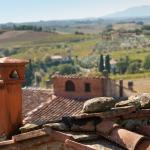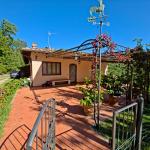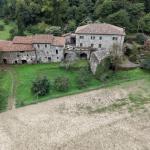
Why is this house in Italy so cheap?
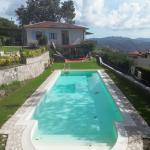
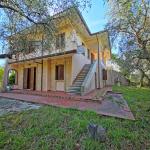
It describes a stone house with olive trees and a view across three rolling valleys for 80,000 euros. The message that usually accompanies it is: “Have a look – isn’t that ridiculously cheap?” And yes, it is. But the price doesn’t answer the question that really matters: what will this house cost you when you factor in the purchase price, renovation costs, running costs and a potential resale?
I don’t want to scare you off cheap houses here – on the contrary, some of the most rewarding purchases I’ve heard of initially looked like a risk on paper. But a low price in Italy almost always has a reason. Sometimes it’s harmless: a remote location, a village from which young people are moving away. Sometimes it comes at a high cost: a terrace that was never granted planning permission, a roof that’s been leaking for years, or a group of heirs who can’t agree amongst themselves. Recognising the difference between the two is, essentially, the whole art of buying a house in Italy. Here are the ten reasons I come across most often – and what you should do in each case before you fall in love with the property.
Ten reasons, and what lies behind them
1. The location. Many affordable properties are situated in places where hardly anyone wants to live anymore – small mountain villages, towns without a doctor, without a supermarket, and sometimes without a passable road connection in winter. For someone seeking precisely this tranquillity, this is not a drawback, but the very reason for buying. For a family with school-age children or for investors planning to let the property later, the same location quickly becomes a problem. Drive the route to the nearest supermarket yourself – ideally in winter and in the rain – rather than just checking it on Google Maps. And ask yourself quite objectively: who would buy this house from me in ten years’ time?
2. The condition. A house costing 70,000 euros can end up being more expensive than a move-in-ready one for 180,000 if the roof, electrical system, heating and pipework all need replacing at the same time. I’ve seen buyers who fell in love with a natural stone façade only to realise later that that very wall had been drawing in damp for years. Before making any binding decision, consult an independent surveyor or architect. Never equate the purchase price with your actual budget – renovation costs, immediate repairs and a decent contingency fund should always be factored in.
3. The land registry and reality do not match. The Italian land registry, the Catasto, records what exists on paper – floor areas, room layouts and property boundaries. Whether this matches reality is another matter. The solicitor does check this correspondence when drawing up the purchase contract, but only right at the very end of the process. Anyone who waits until then risks the whole process grinding to a halt at that very stage.
4. Unauthorised extensions. A conservatory, a swimming pool, a converted loft – all of these may be neatly recorded in the land registry without the local council ever having authorised them. This is the point at which many foreign buyers are left in a state of shock, because they assume: if it’s in the land registry, then it must be legal. But is that necessarily the case?
Have the cadastral map and the local building records checked separately, ideally by someone who can read both languages – the bureaucratic one and the actual one.
5. The region itself. Italy is beautiful, but not every part carries the same low level of risk. The whole country is at risk of earthquakes, with particularly vulnerable areas in the north-east, the central Apennines, Calabria and eastern Sicily. That doesn’t mean you shouldn’t buy there – just that the year of construction and the structural integrity must be part of the equation, not just the view from the balcony.
6. Running costs. A house can be cheap because it guzzles energy like a bottomless pit. The Italian energy performance certificate, the APE, must be provided to you before you sign – make sure you read it, not just as a formality. You won’t notice single-glazed windows and an old oil-fired heating system at the notary’s appointment, but you’ll find out every winter.
7. Third-party rights. Who really owns the house? Are there co-heirs who haven’t yet given their consent? Is the access road part of the plot or just a right of way that the neighbour could, in theory, revoke? The notary checks ownership and mortgages, but a bargain offer should still not simply be waved through until the notary appointment.
8. Service charges. With flats, a low price can be offset by high ongoing obligations. Ask specifically for the latest minutes of the owners’ meetings – if a roof renovation has already been approved but not yet paid for, the bargain can quickly turn into an expensive after-effect.
9. Listed building status and restrictions on use. Sometimes a property is cheap because it simply has fewer possibilities than the property description suggests – no licence for tourist lettings, restrictions on any alterations to the façade. This isn’t necessarily a bad thing. Listed building status often preserves precisely the character you wanted to buy. You just need to know what you’re getting yourself into.
10. Pressure to sell. A low price can simply mean that the seller needs money quickly. An inheritance, a separation, or the property having stood empty for a long time. This can be a real opportunity – but at the same time, it’s one of those cases where it’s crucial to look very closely. How long has the house been empty? Have the roof and pipework been maintained at all during that time? And are all the heirs really on board?
Work out the total cost, not just the purchase price
The additional costs associated with a property purchase in Italy depend on whether you’re buying from a private individual or a company, and whether you meet the criteria for the ‘Prima Casa’ tax relief. When buying from a private individual, the registration tax is usually 9 per cent of the cadastral value, or 2 per cent with the tax relief. For buyers from Germany, the following applies: a holiday home is not automatically classified as a ‘Prima Casa’ for tax purposes – have this checked in advance rather than simply assuming it to be the case.
| Cost item | Example based on an asking price of €90,000 |
| Purchase price | €90,000 |
| Registration tax, notary fees and purchase costs | vary depending on individual circumstances. |
| Estate agent’s commission | depends on the contract |
| A technical survey | is usually regarded as money well spent |
| Immediate measures | (case-by-case) |
| Renovation | depends heavily on the specific condition of the property |
| contingency fund | essential to budget |
| Running costs | annually |
Don’t look for the cheapest house. Look for the lowest realistic overall budget that will allow the house to turn out exactly as you envisage it.
Three moments that decide everything
Before making an offer, it’s worth taking a calm look: compare the price with similar houses in the same micro-location, view the house at different times of day, and request a written list of all plots of land and outbuildings.
Request the floor plan, a copy of the land registry extract and the energy performance certificate before any money changes hands.
Before signing the preliminary contract (the ‘compromesso’), ownership and any encumbrances must be clarified. Obtain written confirmation of compliance with land registry and building regulations – a verbal assurance is not sufficient, no matter how friendly it may sound.
During the purchase process itself, the key point of this entire article applies: the notary does not replace your own due diligence. They ensure the purchase is legally sound, not necessarily wise. In more complicated cases, it is worth engaging an independent solicitor who works solely for you.
Opportunity or warning sign?
An affordable house becomes a good choice if the location is a deliberate fit for your lifestyle and the ownership situation is fully clarified. Furthermore, the ownership situation should be fully clarified, the land registry records should match the physical condition of the property, and you should have a realistic plan for renovation and use.
On the other hand, be wary if the price is conspicuously lower than comparable properties and no one can tell you why; if documents are to be provided ‘later’; or if you’re being pressured into making a quick deposit before anyone has even carried out a check. Such signals are almost never a coincidence – they’re usually exactly what they appear to be.
Frequently Asked Questions
Why are some houses in Italy so cheap?
Usually, a combination of a remote location, the need for renovation, poor energy efficiency and, sometimes, uncertainties regarding planning permission. A low price can be a real opportunity – provided you understand the reason behind it, rather than ignoring it.
What do you need to check before buying?
Ownership structure, encumbrances, land registry documents, planning permission, actual condition of the property, energy performance certificate and technical condition – ideally all of this before any money changes hands.
What is the difference between the Catasto and planning permission?
The Catasto shows what exists on paper. Planning permission shows what the local authority has authorised. The two can differ, which is why they must be checked separately.
Does the notary check everything?
No. They check ownership and any encumbrances relevant to the land register, but not structural integrity, the roof or damp. For the technical aspects, you’ll need an independent expert.
What is the APE?
The Italian energy performance certificate. It shows how much you’ll spend on heating in winter – read it before you sign, not afterwards.
How much are the additional purchase costs?
When buying privately, there’s usually a 9 per cent registration tax on the cadastral value, or 2 per cent with the ‘Prima Casa’ discount. On top of that, there are notary fees and any estate agent’s commission.
Can I rent out a cheap house straight away?
Not automatically. Check beforehand whether the property complies with building regulations and what the local council’s rules are regarding letting. Verbal assurances do not count.
Do I need to check for natural hazards?
Yes. Maps from the Protezione Civile provide an initial guide to earthquake, flood and landslide risks – they are no substitute for a property-specific assessment, but they’re a promising start.
Conclusion
A low price is rarely a coincidence in Italy. There’s almost always a reason behind it – the question is simply whether you’ll know what it is before you sign, or only afterwards. If you take the time to look closely, you can still find truly exceptional properties in this country for very little money. If you don’t invest that time, you’ll end up paying for it later – usually with interest.