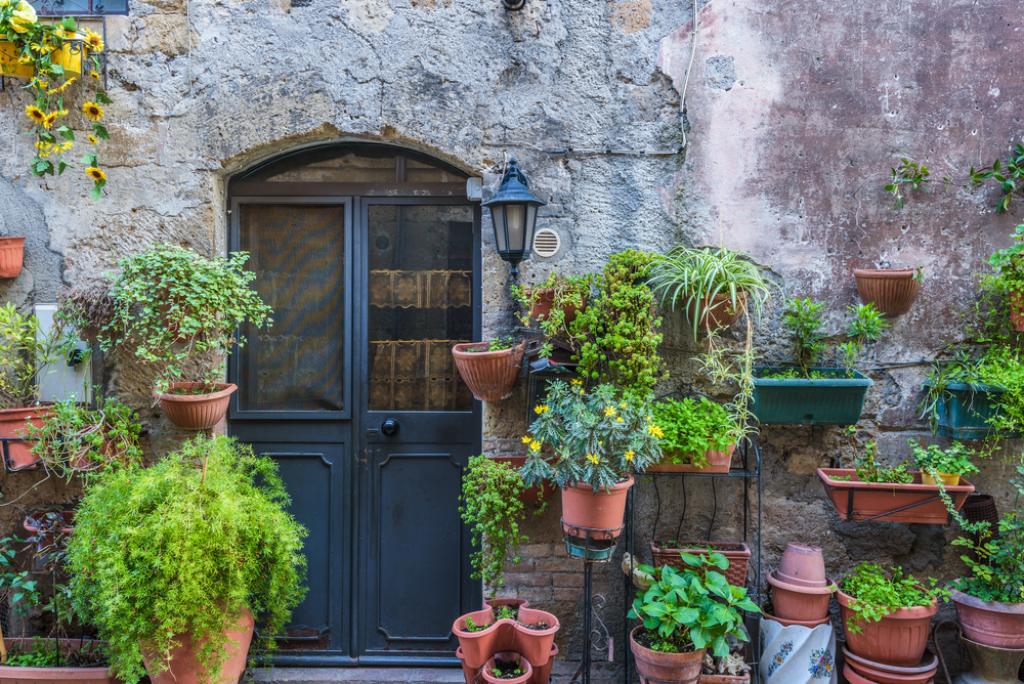
Buying a house in Italy
Imagine this: you’re sitting on a terrace in Tuscany, with olive trees stretching as far as the eye can see, a glass of local wine in your hand – and the house behind you is yours. This isn’t a dream, but a realistic prospect for buyers who are discovering the Italian property market for themselves.
What many don’t know: as an EU citizen, you can buy property in Italy without a special permit – freely, with legal certainty and with the same fundamental rights as an Italian citizen. What you need is not insider knowledge, but a clear understanding of the process. Because buying property in Italy follows its own logic – structured, yet in some respects fundamentally different from the process in other countries.
Those who understand this can buy with confidence. Those who ignore it fall into traps that could have been avoided.
Why the process is worth it – and where it differs
The buyer knows their home market: a notary appointment, land registry entry, done. In Italy, things work differently – not worse, just differently. Three steps characterise the process in a way that does not exist elsewhere: the Proposta d’acquisto as a binding offer to purchase with a deposit, the Compromesso as a legally binding preliminary contract, and the Rogito as the final notarised contract through which ownership is transferred.
In between lies a system of technical inspections, tax considerations and specialists that you should be familiar with before you even view a property. This guide takes you step by step through the entire process – with all the relevant Italian technical terms, specific figures and a focus on what really matters.
Step 1: Clarify the requirements – before the search begins
Before you even open a property listing, there are two questions that will determine your entire tax and financing strategy.
Primary residence or second home? The decision is no mere formality – it has direct tax implications. Anyone who registers the property as a ‘prima casa’ (primary residence) and transfers their residence to the municipality pays just 2% land transfer tax (Imposta di registro) on the cadastral value when buying from a private seller. For a second home or holiday home, the rate is 9%. With a purchase price of €400,000 and a cadastral value of €200,000, that makes a difference of €14,000 – for this tax alone.
Financing in country of origin or Italy? Both options are possible and have their pros and cons. Italian banks are more conservative in their lending, requiring their own valuations and extensive documentation. Some specialist institutions offer overseas financing, often secured against an existing property. What you should clarify in advance: your realistic financing framework – before you fall in love with a property.
Step 2: Budget and ancillary costs – the honest calculation
One of the most common mistakes made by buyers is a calculation that stops at the purchase price. The reality is different: allow for 10–15% of the purchase price as ancillary costs. This is not a precaution – it is a necessity.
The key items briefly:
- Notary fees (Notaio): approx. 1–2% of the purchase price, at least €2,000–€6,000
- Estate agent’s commission (agente immobiliare): approx. 3% plus 22% VAT
- Land transfer tax (Imposta di registro): 2% (first home) or 9% (second home) of the cadastral value
- Translator, solicitor, surveyor: a further €1,000–3,000 depending on requirements
Anyone buying a holiday home for €350,000 should therefore realistically expect total costs of up to €400,000. If you factor this in from the outset, you won’t face any surprises.
Step 3: Codice Fiscale – nothing works without it
The Codice Fiscale is the Italian tax number and the first specific document you will need. No purchase contract, no bank account, no utility contract – without a Codice Fiscale, nothing works in Italy.
Applying for it is straightforward: in Italy, you can do so directly at the Agenzia delle Entrate (the Italian tax office) with your passport or ID card, usually on the same day. From the home country, you can apply via the Italian consulate – or through an experienced estate agent who is familiar with the process.
The most important tip: Apply for your Codice Fiscale early – at the latest, as soon as you know you’re serious about it. There’s no reason to wait.
Step 4: The property search – strategy rather than chance
The search for the right property is easier today than ever before – and at the same time more confusing. Specialised portals, local agencies, international-speaking estate agents: the channels are diverse.
What makes the difference is not the platform, but the estate agent. An experienced, bilingual agente immobiliare with proven expertise in dealing with foreign clients is not a luxury – they are your most important safeguard. They coordinate viewings, conduct negotiations and guide you through the preliminary contract and the appointment with the notary. Although the profession is regulated in Italy, there are significant differences in quality.
What you should look out for: registration with the relevant professional association, concrete references from foreign buyers and clear communication regarding commission and the scope of services – before you view a property together.
Step 5: Due Diligence – the step that decides everything
This is where most buyers fall at the hurdle – not because of the price, not because of the language, but because they skip this step too early or do not take it seriously enough.
The surveyor is your on-site technical expert. They check that the building plans match the reality on the ground, verify the existence of building permits (permessi di costruire) and determine whether any unauthorised alterations (abusi edilizi) exist – a real risk, particularly in rural areas. Their report is not an option, but a fundamental requirement.
In parallel, two documents are essential for any serious preparation for a purchase:
- The visura catastale: a land registry extract showing the cadastral value, property classification and ownership details
- The visura ipotecaria: a check for registered mortgages, encumbrances and easements
In more complex cases – inherited properties, unclear ownership structures, agricultural land – it is also worth consulting an avvocato (solicitor) with experience in Italian property law. The costs involved are manageable. The costs of not involving one can be substantial.
Step 6: The Proposta d’acquisto – binding from the moment it is signed
The Proposta d’acquisto is the formal offer to purchase – and it is binding. It sets out the purchase price, payment terms, deadlines and any conditions, such as a financing clause. In addition, an initial deposit is required, typically around 10% of the purchase price.
This deposit is usually a caparra confirmatoria – with clear legal consequences: if the seller withdraws, they must repay it double. If the buyer withdraws, it is forfeited.
This means: Only sign the Proposta once the essential checks have been completed and you are truly committed to buying. A Proposta is not a non-binding expression of interest – it is the first step in a legally binding process.
Step 7: The Compromesso – Italy’s key contractual document
The Compromesso (contratto preliminare di compravendita) is the preliminary contract, and its importance for the buyer cannot be overstated. It contains a detailed description of the property, the full purchase price, the payment plan, the planned date of the notary appointment and all conditions.
A deposit of 10–30% of the purchase price is usually paid by the time the Compromesso is signed. The contract can be registered in the land registry (trascrizione) – this is particularly recommended if there are several months between the Compromesso and the notary appointment.
What buyers need to know: In Italy, the Compromesso is considerably more binding than a comparable preliminary contract in home country Withdrawal is possible – but expensive. Always have the contract checked by a specialist before signing. Always.
Step 8: Preparing for the notary appointment – bringing everything together
The notary in Italy is neutral and is usually chosen by the buyer. They draw up the final deed of sale (atto di compravendita), check all documents and ensure the legal correctness of the entire transaction.
For the notary appointment, you will need:
- Passport or identity card and Codice Fiscale
- If applicable, marriage certificate and evidence of matrimonial property regime
- If financing is involved: bank documents and, if applicable, mortgage deed
- Powers of attorney, if any of the parties cannot attend in person
Don’t speak Italian? A court-sworn interpreter is usually required for the notary appointment. The costs typically range between 500 and 1,500 euros – money well spent.
Step 9: The Rogito – the moment everything comes to a head
The Rogito is the notarised purchase contract. The notary reads it out, the interpreter certifies the translation, and both parties sign. The purchase price is transferred via bank transfer or crossed cheque – cash payment is neither customary nor permitted.
The key difference: in Italy, ownership is transferred upon signing the Rogito – not only once it has been entered in the land register. The notary then registers the contract with the land registry, usually within 20 days. The keys are usually handed over immediately afterwards.
Step 10: After the purchase – what still needs to be done
The Rogito has been signed, the keys are in hand. But there are still a few things to sort out:
Utility contracts: Electricity, gas, water and waste collection charges (TARI) must be transferred or set up anew – either directly with the respective providers or via local service providers.
Ongoing taxes: The IMU (Imposta municipale propria) is the annual property tax on second homes – approx. 0.76–1.06% of the cadastral value, depending on the municipality. It is payable in two instalments: 16 June and 16 December.
Property management and insurance: In the case of condominiums, there is often a management company with associated running costs. Building insurance and liability insurance should be taken out immediately after purchase.
The most common mistakes – and how to avoid them from the outset
We’ve all seen them in practice. Here are the four that are most common – and most costly:
Signing the compromesso before due diligence is complete. This is the mistake that cannot be undone. The surveyor’s inspection and land registry check must be completed before signing – not afterwards.
Trusting estate agent’s details without checking them yourself. Information on floor space, planning permission status and condition is often unverified. In some regions of Italy, unauthorised buildings are not uncommon.
Underestimating service charges. 10–15% sounds abstract until you work it out based on a specific purchase price. If you factor this in from the start, you won’t face any nasty surprises at the solicitor’s appointment.
Signing contracts without fully understanding them. Even if a notary and interpreter are present: take the time to read and understand everything. If in doubt, wait an extra day. It’s always worth it.
FAQ: The most important questions about buying property in Italy
Do I need special permission?
No. As an EU citizen, you can buy property in Italy without a special permit. The only requirements are a valid Codice Fiscale and compliance with Italian tax regulations.
How long does the buying process take?
It typically takes 2–3 months from the binding offer to the appointment with the notary – and potentially longer, depending on the due diligence required, financing arrangements and the notary’s workload.
What is the difference between a Compromesso and a Rogito?
The Compromesso is the binding preliminary contract, which includes a deposit and all essential terms of purchase. The Rogito is the final notarised contract through which ownership is officially transferred.
Can I buy property from my home country?
Yes – this is possible with a notarised power of attorney (procura) and an authorised representative on site. The notary and solicitor must comply with the formal requirements.
What is the total amount of ancillary purchase costs?
Allow for 10–15% of the purchase price – including land transfer tax, notary, estate agent, translator and, if necessary, a solicitor. You can find a complete overview in our guide to ancillary purchase costs in Italy.
Do I need a solicitor?
Not legally mandatory – but recommended for inherited properties, agricultural land or complex ownership structures. The costs are manageable, the protection substantial.
Conclusion: Preparation is the real advantage of the purchase
Buying property in Italy is not an adventure, but a process. A clearly structured, well-documented process – with technical terms you should know, experts you need, and pitfalls you can avoid. If you go into the search prepared, don’t skip the surveyor, only sign the preliminary contract once everything has been checked, and let experienced partners guide you – you’ll end up holding the keys in your hand. And may soon be sitting on that very terrace we mentioned at the start.
Legal notice: This article is for general information purposes only and does not replace individual legal or tax advice. Information regarding tax rates, deadlines and procedures is subject to change. Please consult a qualified professional before making a purchase decision.