Buying property in Umbria
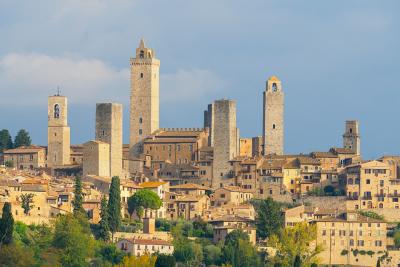
Umbria is the region in central Italy that people know without really knowing it. They’ve seen the images – rolling hills covered in olive groves, medieval villages bathed in golden evening light, a sky that seems wider than anywhere else. Most people associate these images with Tuscany. In fact, many of them come from Umbria.
The difference lies not in the appearance, but in the experience. Tuscany has more tourists, more international attention, more buyer demand — and correspondingly higher prices. Umbria has the same things, only quieter. Anyone wishing to buy in Italy who isn’t necessarily tied to a well-known brand will find one of the country’s most interesting property markets here.
This article shows what Umbria is really like as a region to buy in: honest in its prices, clear in its advantages, fair in its limitations.
What makes Umbria special as a property location?
Definition: Umbria (Italian: Umbria) is a landlocked region in central Italy — the only one on the peninsula that borders neither the sea nor another country. It consists of the two provinces of Perugia and Terni and lies between Tuscany to the north, the Marche to the east and Lazio to the south.
What distinguishes Umbria from Tuscany is not a difference in quality – it is a difference in volume. Fewer tourists in the village squares, fewer international buyers in conversation with the estate agent, less competition for the country house you have your eye on. That is not a disadvantage – it is a different promise.
What Umbria shares with Tuscany: the rolling hills, the quality of the food, the pace of everyday life, the abundance of Romanesque churches, medieval town centres and markets where a glass of wine and a chat go hand in hand. Anyone who has ever sat in the piazza in Spello on a May morning, sipping an espresso whilst the old men around him play Briscola, understands: Umbria is no less Italian than Tuscany. It is simply a different Italy.
What Umbria offers in addition: Lake Trasimeno, the largest inland lake in central Italy; the Valnerina, a wild mountain valley; truffles of a quality and abundance surpassed only by the Marche; and a tranquillity that is no longer a given in Tuscany during the summer.
Property prices in Umbria: What you get for your budget
Umbria is 15 to 30% cheaper than Tuscany for comparable properties — with regional variations. ¹
Indicative prices (2025/2026):
- Small townhouse (80–120 m²) in a historic town centre: €80,000–180,000
- Country house (casale, 150–250 m²) with land, in need of renovation: €120,000–280,000
- Renovated country house with pool: €280,000–550,000
- Townhouse in Perugia or Orvieto: €150,000–€350,000
For comparison: A comparable renovated country house in Chianti or the Maremma is typically 30–50% more expensive. ¹
Where prices are lowest:
The Valnerina in south-eastern Umbria (around Norcia and Cascia) has low prices following the 2016 earthquakes – but also limited infrastructure and renovation work required. Those looking to buy and invest at a low price will find opportunities here. Those wishing to move in quickly should opt for other locations.
The best locations in Umbria – by purchase objective
For culture and infrastructure: Perugia, Orvieto, Spoleto
Perugia is the capital of Umbria – a proper city with a university, an international airport, world-class museums and a medieval town centre perched on a hill. Property prices are surprisingly moderate for a university town. Demand: renovated townhouses in the old town and country houses in the hilly surroundings.
Orvieto is one of Italy’s most dramatic towns — perched on a tuff rock above the Paglia Valley, with a cathedral that ranks among the finest in Italy. The town has an active international buyer community, is just 90 minutes from Rome and offers a vibrancy that many smaller villages lack. Prices: slightly above the regional average.
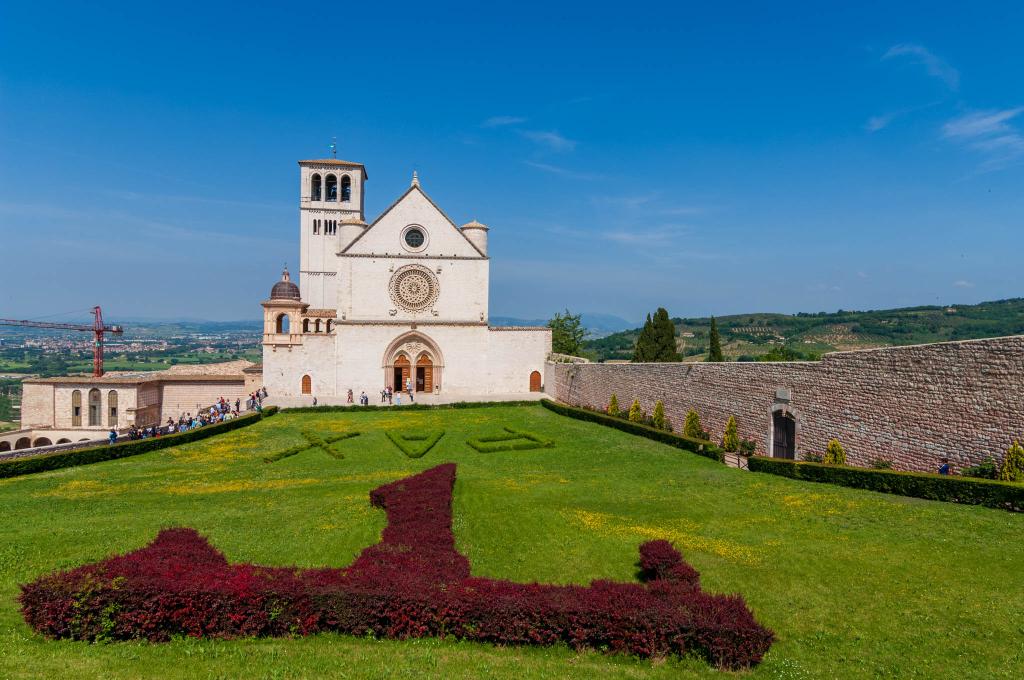
Spoleto combines medieval character, a renowned cultural festival (Festival dei Due Mondi) and a location on the edge of the Valnerina. Less well-known than Assisi, but for many the more interesting choice — livelier, more diverse, with an active local arts scene.
For nature and tranquillity: Valnerina, Castelluccio, the Norcia area
The Valnerina is the Nera Valley south-east of Spoleto – wild, narrow, with medieval towers perched on the cliffs and a landscape that has remained largely untouched. The Piano Grande plateau near Castelluccio bursts into colour in spring, with hues so vivid they need no filters.
Important note regarding earthquake risk: Parts of Umbria, particularly the area around Norcia and Cascia, were at the epicentre of a severe earthquake in 2016. Many buildings were damaged or destroyed. Anyone buying in this area must have the building structure inspected with particular care and ensure that any renovations comply with current earthquake regulations (norme antisismiche). ² This is not a reason to rule out the area, but a factor that must be considered when making a purchase decision.
For water and panoramic views: Lake Trasimeno
Lake Trasimeno is Italy’s fourth-largest lake and the largest inland lake on the peninsula. Its shores are flat and green, and the villages are quiet and largely uncommercialised. Castiglione del Lago, Passignano sul Trasimeno and Tuoro sul Trasimeno are the best-known towns on the shore.
Holiday homes on Lake Trasimeno are increasingly being discovered by German and Northern European buyers as an alternative to Lake Garda and the Tuscan coast — at significantly lower prices. A house with a lake view can be found here for €200,000–350,000, which on Lake Garda would now only be possible in very remote locations.
What Umbria specifically means for German buyers
Language and infrastructure
Umbria is less developed for tourism than Tuscany – this has implications for buying advice. English-speaking estate agents and solicitors are readily available in Perugia and Orvieto. In smaller villages and rural areas, a basic knowledge of Italian is helpful, and sometimes necessary.
The infrastructure is good in towns and along the main routes. In the remote mountains of the Valnerina or on the high plateaus, road conditions can be poor – a four-wheel-drive or at least a high-clearance vehicle is a serious consideration there in winter.
Getting to Umbria
- Perugia Airport (PEG): small, but with direct flights from Germany (depending on the season). Convenient for travelling to the northern part of the region.
- Rome-Fiumicino Airport (FCO): a 1.5 to 2-hour drive to Orvieto, Perugia or Spoleto. Wide range of routes.
- Florence Airport (FLR) or Pisa Airport (PSA): an alternative for northern Umbria.
- Train: Perugia, Orvieto and Spoleto are accessible by long-distance train. The journey from Rome to Orvieto takes approx. 70 minutes.
Typical property types in Umbria
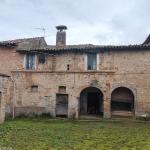
- Casale: The classic Umbrian country house built of natural stone, often with a barn and olive grove. Usually in need of renovation but offering the greatest potential for design.
- Townhouse (Palazzo): In historic town centres such as Orvieto or Spoleto – often spread over several floors, with darker rooms, but situated at the heart of the community.
- Apartment in a Borgo: Flat within a historic village complex. An affordable entry-level option requiring little maintenance.
- Agriturismo property: Farm with guest rooms – for buyers interested in running the business.
What to look out for when buying in Umbria
Earthquake history and building fabric: In earthquake-prone areas, a technical survey is particularly important before purchase. Current building regulations require seismic safety measures for renovations in certain zones – this significantly increases renovation costs. Ask the seller for the seismic report and the building’s classification.
Vincolo and conservation restrictions: Historic town centres in Umbria are often listed. This means that façade design, window sizes and choice of materials may be restricted by local council regulations. This is not a problem, but it does prolong the planning phase.
Water supply in rural areas: In remote locations, cistern water or well water is common. Before purchasing, check whether the property is connected to the mains water supply — and if not, how reliable the alternative supply is.
Umbria vs. Tuscany: Direct Comparison
| Criterion | Tuscany | Umbria |
| Average property price | Higher | 15-30 % cheaper |
| Tourist traffic | High to very high | Moderate quieter |
| Infrastructure | Very good | Good (in towns), variable in the countryside |
| International buyer demand | Very high | Moderate growing |
| Investment potential | Prices high | Growth potential present |
| Tranquillity and authenticity | Declining | Higher |
| Earthquake risk | Low | Elevated in some areas |
Umbria as an investment: Where the region stands
Umbria was long the sleeping brother of Tuscany — known to those in the know, invisible to the rest. That is changing. Demand for Italian property outside the classic hotspots is growing, and Umbria is benefiting as the first choice for buyers seeking character rather than mass tourism.
Prices have risen slightly in some parts of the region over the last three years — particularly in Orvieto and on Lake Trasimeno. ¹ However, they are still a long way from the levels seen in Tuscany ten years ago. Those who buy are investing in a region that still has room for growth.
This is no promise — property is not a security, and no region develops in a predictable manner. But anyone who knows and loves Umbria does not need the argument of returns. The region speaks for itself.
Two additional factors speak in favour of Umbria as a long-term investment: firstly, the EU Renovation Directive, which will put pressure on older properties to be renovated in the coming years — Umbria still offers many properties here with a low starting point and corresponding potential for value appreciation following professional renovation. Secondly, the special 7 per cent tax regime for foreign pensioners, which applies in parts of Umbria (in the areas affected by the 2016/2017 earthquakes, in municipalities with fewer than 3,000 inhabitants). Anyone receiving their pension income from Germany and living in a qualifying Umbrian municipality can benefit from a flat-rate tax of 7 per cent on all foreign income – for a maximum of ten years.
Conclusion
Umbria is not Tuscany – and that is precisely its greatest advantage. Anyone buying a property in this region is buying into an Italy that is quieter, more authentic and, on average, 20 to 30 per cent cheaper than its better-known neighbour. In return, they get the same quality of landscape, the same food culture, the same architectural tradition – just without the tourist crowds and without the international buying pressure that has driven up prices in Tuscany over the last twenty years.
Anyone wishing to truly understand Umbria as a buyer should do two things: visit the region in at least two seasons – ideally in May and October – and allow plenty of time for the search. The best properties are rarely listed on the major portals, but rather in the windows of local estate agents in Orvieto, Perugia and Spoleto. Those who arrive early, with a clear idea of the region, budget and intended use, will find houses here that would long since have fallen outside the price range in Tuscany.
A final note on the issue of earthquakes: it deserves respect but not panic. With sound building structures, professional inspections and seismic-compliant renovations, it is possible to live safely even in exposed areas. Those who take this into account have the opportunity in Umbria to buy what many can no longer find in Tuscany: an authentic piece of Italy at a fair price.