Buying property in Apulia
There are regions you’ve heard of even before you’ve visited them. Apulia has long been one of them. White towns perched on cliffs overlooking the sea. Trulli with their distinctive conical roofs amidst olive groves that are older than most European cities. A coastline that shifts between the Adriatic and the Ionian Seas, leaving nothing to be desired.
What many don’t yet know: in 2026, this region will be among the most interesting property markets in the whole of Italy. Apulia’s appeal to tourists has caught up massively in recent years. Prices per square metre have not yet done so. This is precisely where the opportunity lies – and this is exactly why it is worth taking a closer look now.
Why Apulia is such a focus for international buyers in 2026
The fact that Apulia has made it onto the map of international property buyers is evident from concrete figures. The proportion of foreign buyers is growing significantly, with accounting for a significant share. Places such as Polignano a Mare, Ostuni and Alberobello have gained global recognition through social media and international travel reports – the so-called “postcard factor” of this region is now comparable to that of Tuscany or the Amalfi Coast.
The crucial difference: the price level hasn’t caught up yet.
With average asking prices of around €1,400–1,600 per square metre, Apulia is still well below established premium regions in Italy. Tuscany, Liguria and Lake Garda have long been in a different price bracket in sought-after locations. Those buying in Apulia often get considerably more property for the same budget – in a region whose infrastructure and international visibility have been growing steadily for years. Added to this is another factor that decides urgent: prices are rising. Moderately, but steadily – with an increase of around 1.3% for properties on the market within a year. Those who wait will pay more.
Prices by sub-region: What the market shows today
Apulia is not a homogeneous region. Anyone who really wants to understand the market must differentiate – by location, property type and local demand structure. The price differences between the sub-regions are considerable and offer an entry point for every budget.
Salento: Lecce, Gallipoli, Otranto – culture meets coast
Salento, in the deep south of Apulia, offers one of the widest price ranges in the region. In the hinterland, for example in Galatina or smaller towns in the province of Lecce, properties can still be found well below 1,000 euros per square metre. In the coastal zone with direct sea views, prices rise noticeably: properties here reach €1,400–€1,500 per square metre and above. For budget-conscious buyers seeking tranquillity, authenticity and the potential to personalise their home, the Salento hinterland is one of the most interesting options in the whole country.
Valle d’Itria and Ostuni: the epicentre of the Trulli region
The Valle d’Itria – including Alberobello, Cisternino and Locorotondo – and the area around Ostuni are among the most expensive sub-markets in Apulia. Demand for iconic trulli and renovated masserie is strongest here, and this is directly reflected in the prices.
In Ostuni, houses are reported to cost an average of around €2,700–2,800 per square metre. Modernised trulli and masserie in prime locations command even higher prices. This region is particularly suitable for buyers looking to capitalise on tourist rental potential or seeking a prestigious holiday home – and who are prepared to invest accordingly.
Gargano and the North Coast: underrated, affordable, unspoilt
The north coast of Apulia around the Gargano National Park – with Vieste as its best-known town – is one of the most affordable and, at the same time, most underrated markets in the region. Average house prices here are around €950–1,000 per square metre, despite a coastline that leaves nothing to be desired in summer. For buyers looking to combine nature, open spaces and an affordable entry point, the Gargano is one of the most exciting options in southern Italy – and still far from being discovered.
Greater Bari, Monopoli, Polignano: urban dynamism driving up prices
The province of Bari has the highest average prices in the whole of Apulia. In Monopoli, houses now cost over 3,000 euros per square metre, with Polignano a Mare similarly priced. City centre flats in Bari are around 1,800 euros per square metre and upwards. By international standards – compared to Florence, Rome or Lake Como – these prices still seem moderate. For Apulia, they represent the upper end of the market. Anyone wishing to combine urban life, gastronomy and culture with sea views has come to the right place.
Trulli, masserie, coastal apartments: the property landscape of Apulia
Apulia offers a diversity of properties that is virtually unmatched elsewhere in Italy. Three types in particular shape the market – and all three have their own history, their own character and their own buyer group.
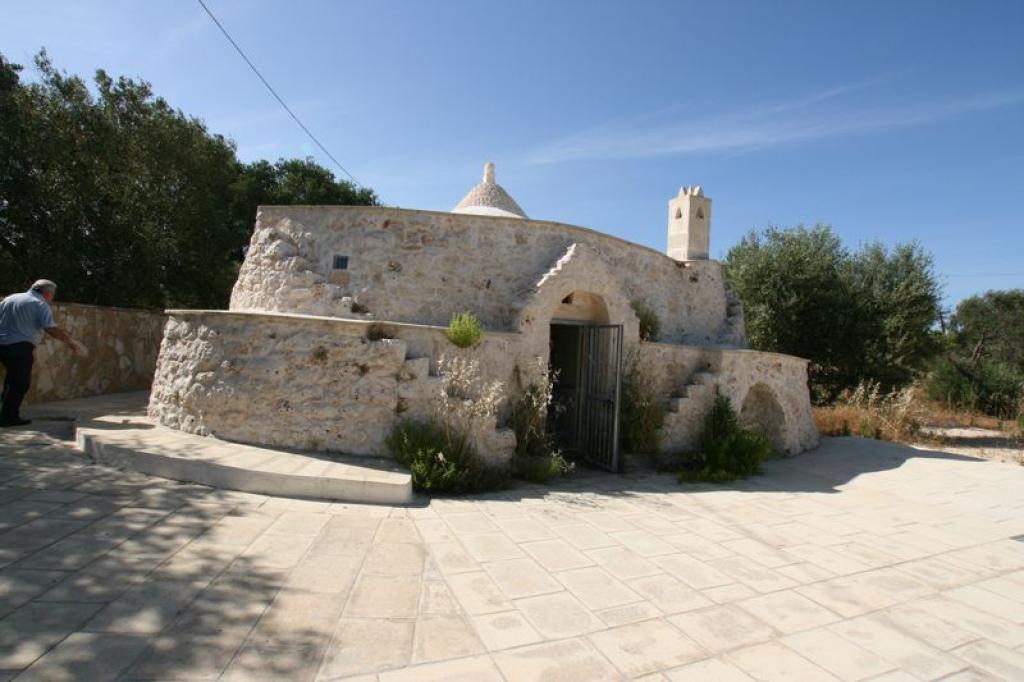
Trulli are the region’s icon: whitewashed round buildings with characteristic conical roofs, a UNESCO World Heritage Site in Alberobello and typical of the entire Valle d’Itria. They are in demand worldwide as holiday homes, boutique hotels or tourist rental properties. Trulli in rural locations requiring renovation realistically start at around €200,000–300,000; fully renovated properties in prime locations are significantly higher.
Masserie are historic farmhouses full of character: courtyards, olive groves, old masonry, often centuries old. Many have been converted into high-quality holiday villas or agriturismi in recent years – particularly in the areas around Ostuni, Brindisi and Lecce. Smaller masserie start in the mid-six-figure range, whilst luxury properties in prime locations reach into the seven-figure range.
Coastal flats and townhouses in Polignano a Mare, Monopoli or the historic centre of Lecce offer a different kind of quality: immediate access to urban life, gastronomy and culture – combined with strong tourist demand and corresponding rental potential in the summer.
Apulia is particularly attractive to buyers interested in buy-to-let: tourist demand during the summer months is strong and continues to grow. Many buyers use their property themselves in spring and autumn and let it out in the height of summer – a combination that works both emotionally and financially.
Specific price ranges: What you get for your budget
To provide a realistic guide, here are typical scenarios from the current market:
Up to 150,000 euros: Simple houses and rustici in the hinterland of the provinces of Lecce, Brindisi or Foggia – often in need of renovation, but with the potential for completely individual design. Prices per square metre below 900 euros are not uncommon in smaller towns.
200,000–400,000 euros: Trulli in need of renovation or with basic fittings, and smaller masserie in the Valle d’Itria. Similarly, well-appointed coastal apartments in sought-after locations such as Monopoli or Gallipoli
€500,000–€1,000,000: Modernised trulli and masserie in prime locations, sea-view villas in Salento or around Polignano a Mare. The range in this price bracket is wide – depending on the fittings, plot size and distance to the sea.
From €1,000,000: Luxury estates with a pool and large olive groves in the Ostuni area or on the coast near Gallipoli – in a price bracket that starts much lower in Tuscany or on the Côte d’Azur.
Why the ‘value gap’ still exists – and for how much longer
The term ‘undervalued’ is easily said. What market observers mean by this: Apulia’s appeal as a tourist destination – visitor numbers, international reputation, quality of infrastructure – has caught up significantly in recent years. Prices are following this trend, but with a lag. Market reports show that by 2025, Apulia will have reached its highest-ever level for asking prices – a level that is still significantly below that of many premium regions. The window of opportunity is open. But it is slowly closing.
Anyone buying today is buying into a market that still has room to catch up – and into a region that speaks for itself as a place to live and holiday, without the need for lengthy persuasion.
What to bear in mind when buying in Apulia
The buying process in Apulia follows the same pattern as in the rest of Italy: apply for a Codice Fiscale, sign the Proposta, conclude the Compromesso, and have the Rogito notarised by a Notaio. You can find the full process in our guide to buying property in Italy.
However, Apulia has a few property-specific features you should be aware of:
A technical inspection is mandatory – particularly here. Many trulli and masserie are historic buildings with a long history – and sometimes with undocumented alterations or missing permits (abusi edilizi). The role of the surveyor is more important here than elsewhere.
Agricultural land. Olive groves, farmland and pasture are subject to special regulations in Italy. Rights of use, existing farming contracts and entries in the land registry should be carefully checked – ideally by a solicitor with experience in Apulian property law.
Additional purchase costs in Apulia typically amount to 10–15% of the purchase price. Ongoing costs include IMU (property tax based on cadastral value, depending on the municipality), TARI (waste collection tax) and, where applicable, property management fees. You can find a complete overview in our article on additional purchase costs in Italy.
FAQ: Buying property in Apulia for buyers
Will property in Apulia still be affordable in 2026?
Compared to northern Italian regions, yes – with average prices per square metre of €1,400–1,600, Apulia is significantly cheaper than Tuscany or Liguria. Prices are rising moderately but steadily.
Which regions are the most expensive?
Top prices are found around Monopoli, Ostuni, Polignano a Mare and in parts of the province of Bari – with houses costing over €2,500–3,000 per square metre in prime locations.
Where can you still find affordable starter properties?
In the hinterland of the provinces of Lecce, Foggia and Brindisi – particularly in smaller towns such as Galatina, where properties can still be found for well under €1,000 per square metre.
Is a trullo a worthwhile investment?
Trulli in the Valle d’Itria and around Ostuni are easy to let to tourists and in demand worldwide. Realistically, properties in need of renovation start at €200,000 and upwards – they are by no means a bargain anymore.
Does the buying process differ from other regions of Italy?
The legal process is identical. The specific features lie in the property itself: trulli and masserie require more thorough technical inspections, and agricultural land is subject to its own regulations.
Does buy-to-let make sense in Apulia?
For many buyers, yes – summer tourist demand is strong. A prerequisite is the correct tax and legal structuring of the rental, as well as a realistic view of the management costs.
Conclusion: Apulia is no longer an insider tip – but it’s not too late yet
Apulia has arrived. On Instagram, in international travel magazines, on the watchlists of global buyers. What the region still offers is a price level that has not yet fully caught up with its growing appeal. This will continue to align. How quickly is impossible to say with certainty. What can be said with certainty is this: those who buy today are buying into a market with potential for growth – and into a region that is equally appealing as a place to live, a holiday home and an investment.
Note: All price figures are based on available market data and asking prices (as of 2025/2026) and are for guidance only. Actual purchase prices may vary depending on the property, location, condition and outcome of negotiations.