Italy 2035:
Imagine two buyers. One buys an apartment in Tuscany in 2026 because he knows what he is getting: security, prestige, a market that has been functioning for thirty years. The other buys a house in Apulia in the same year, because he suspects what it could be in ten years. Neither of them makes a wrong decision. They only make contrasting decisions, and both will look back on their purchase with satisfaction in 2035, for entirely individual reasons.
That's exactly what it's about when thinking about Italy's real estate market until 2035. The question is not which region will win. Several will win – just in different ways, at different prices, with different risks. Whoever understands this does not have to commit to a "best" region. He just needs to know what he wants.
What really changes
Three things determine how the market will develop in the next ten years. Demand, of course – where people want to live, work, or vacation. Supply, equally clear – it refers to where construction can still take place and where it cannot. And then a third factor that no one had on their radar ten years ago: the climate.
At first, it sounds like a side issue. But it isn't. Water scarcity in parts of Southern Italy, increasingly hotter summers on the coast, while higher-altitude regions are hardly affected – this is already influencing where international buyers are looking. By 2035, this effect is likely to be much more pronounced than it is today.
What follows from this: A single average price for "Italy" is becoming less meaningful. Even today, there are worlds between a villa on Lake Como and a rustic house in the interior of Calabria – not only in terms of price but also in everything that lies behind it. These differences are becoming more extensive, not smaller.
There is a fourth point that many overlook: how broad the demand in a region is. A place that relies on just one buyer group – let's say, exclusively on short-term vacationers from one country – is more susceptible to fluctuations. This contrasts with a place that simultaneously serves owner-occupiers, international second-home buyers, and local demand. You rarely notice it immediately. But it is precisely this mix that often determines whether a region will fall with the next market downturn or remain stable.
The regions that simply remain stable
Some markets don't need to be predicted. They have been functioning for decades, and there is little reason to assume that this will change.
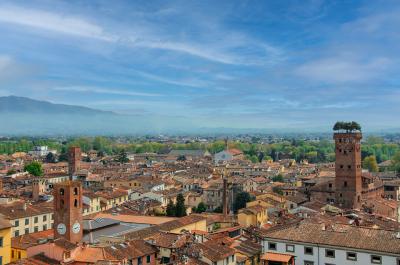
Tuscany, for example. Whoever buys there doesn't acquire a return story – they gain security. International demand, a rental market that remains stable even in crisis years, as well as prices that rarely fall and never drop significantly, contribute to the region's attractiveness. That's why the region remains expensive: it simply doesn't disappoint.
Milan and Lombardy operate differently, but with similar reliability. This is Italy's economic engine, and as long as international companies maintain offices there and students flock to the city, the demand for housing remains high. This is not a holiday market. This is a job market with a demand for real estate.
And then South Tyrol, the Dolomites. A limited supply, because the mountains simply don't provide new building plots. A quality of life that many seek, and few find. And – this becomes more significant as summers get hotter – an altitude that protects against heat when other regions are barely bearable in August.
Lake Garda also belongs in this category, even though it does not appear on any map as its own region. Mild climate, several airports within reach, a second home culture that existed there when other regions were not yet on anyone's radar. And a shoreline that cannot simply be extended when demand increases.
What connects these regions at their core is a kind of boredom in the most positive sense. Nothing surprises there anymore. Prices rarely jump and almost never fall. For buyers for whom tranquillity is more important than the prospect of a big win, that is exactly the point.
Where it gets more exciting
More interesting than the established names are the regions that still have their actual upgrade ahead of them.
Puglia is the most obvious example of this. The coastline is long, the trulli are photogenic, and international buyers have noticeably discovered the region in recent years – but prices have not yet fully followed this development. Those who buy today are in a phase that other regions have long since left behind.
Sicily is like that, but with even more distance between perception and price. The island is becoming increasingly well-known internationally as a travel destination – this is evident from the booking numbers, but not necessarily from the property prices. This gap will eventually close, as experience shows. Just not overnight.
Umbria and the Marches are the quieter case. No hype, no sudden rush – rather a slow, steady interest from buyers who are looking for exactly that. Italian lifestyle without the tourist crowds of the neighbouring regions, moderate prices, and an ideal connection to the long-established Tuscany next door.
Liguria, on the other hand, is doing something interesting right now. Genoa and its surroundings are repositioning themselves, with a clear focus on renovation and energy efficiency. This makes the region a mixed type: partly already a premium location on the coast, and on the other hand, still with real potential for appreciation in the hinterland.
And finally, Veneto – not just Venice, but everything that surrounds it. Padua, smaller towns with their own economic dynamics, holiday regions away from the lagoon. Those who buy there benefit from Northern Italy without having to pay the prices of the immediate lagoon city.
What unites these five regions: They are currently in the phase that Tuscany went through around thirty years ago. The fame is growing faster than the price. Exactly in this gap, those who are early buy.
You can determine this from a simple observation: Nowadays, when talking to friends about a holiday in Italy, you hear just as often "We were in Apulia" as you used to hear "We were in Tuscany." The travellers are already there. The real estate market typically follows a few years behind.
What suits whom
The significant question is rarely "which region," but rather "for what purpose at all."
Anyone who wants to move their life to Italy needs more than a charming view. Medical care, reliable infrastructure, a day-to-day life that works even outside of the holiday season. Tuscany, Umbria, parts of Veneto – these are the regions that are most likely to provide this everyday life.
Those looking for a classic second home, which they use for a few weeks a year, have more leeway. Liguria, the Apulian coast, parts of Sicily – there, what matters most is how it feels when you arrive, not what everyday life looks like in November.
And those who want to invest, with a view to renting and value appreciation, currently find the greatest delta between what a region is already worth and what it could become in Apulia and Sicily.
Many buyers don't really choose between these three options but rather switch from one to another over time – the second home from their forties becomes their actual home in their sixties. Those who keep this in mind buy more wisely: in a region that can offer both.
That sounds like an additional effort when making a purchase decision, but it is a relief. You do not have to make a final decision today about whether you want to live in Italy permanently in twenty years. You can choose a region that keeps this option open without making it a condition.
A look at roads and rails is worth it
There is a simple trick to identify which region will become interesting in five years before everyone else notices: observe the infrastructure. New train connections expanded regional airports, improved roads – these are more reliable early warning systems than any market forecast, because price increases usually only occur years later.
Southern Italy is currently benefiting from EU-funded programs that are set to significantly improve the connectivity of Calabria, Basilicata, and Apulia in the coming years. That's exactly how it worked in Tuscany decades ago – international buyers were there long before the big market woke up.
Whoever wants to know more precisely doesn't have to research construction projects themselves. An experienced local realtor or an informed consultant usually already knows which road will be expanded next and which airport is getting new connections. These details rarely appear in comprehensive market reports, but they often determine whether a region will catch up in five years or not.
What can be argued against
One aspect that might argue against it is that not everything shows an upward trend.
Honestly speaking, not everything is on the rise. In parts of Southern Italy, young people continue to leave their hometowns – heading north, heading abroad. This can weaken local demand, even if international buyers are simultaneously increasing their purchases. Anyone investing there should know: The resale will then depend more on foreign markets than on the neighbouring village.
Regulatory changes are also underway. Some coastal municipalities, especially where holiday rentals are already booming, are discussing stricter rules or higher fees for second homes. This affects the well-known hotspots more than the emerging regions – but anyone planning for over ten years should be aware that such rules can indeed change during that time.
And one last, very practical point: Not every emerging region already has the service provider structure needed for a smooth purchase. Notaries, craft businesses, reliable property management – all of this is already established in Tuscany, whereas in some parts of Calabria or Basilicata, it is still in development. This is not a deal-breaker, but a point that should be realistically considered when buying from afar.
What does that mean concretely? What does that mean specifically?
Anyone buying in Italy today and thinking about 2035 should abandon the idea that there is one right answer. There are regions that offer security. There are regions that offer potential. And there is a climate factor that will change both in the coming years.
Those who want to sell again in five years should rather focus on the faster price dynamics in Apulia or Sicily. Those who want to hold a property for over twenty years and across multiple generations should focus more on stability and climate resilience than on the currently most attractive return.
And for those who are still unsure, a simple exercise often helps: imagine how you will arrive in ten years. Not the first visit, full of anticipation – but a completely normal week in October, when the summer hustle and bustle is over. Does the place still feel right? If so, the region is probably the right one—regardless of what the market forecasts for 2035 say.
The future of Italy in the real estate market is not a national story. It is a regional one. Whoever internalises this decides today that will still hold in 2035.
Frequently Asked Questions about Italy's Real Estate Future Markets
Which region in Italy has the greatest potential for value appreciation by 2035?
Currently, the strongest arguments are in favour of Apulia and Sicily – there, the gap between popularity and price level is still the largest. Umbria and the Marche offer a quieter, but equally solid alternative.
Is Tuscany still a good investment in 2035?
Yes, but more as a safe bet than as an opportunity for returns. The price level is already high, which is why less appreciation potential is to be expected there than in emerging regions – for that, Tuscany is hardly associated with risk.
How important will climate change be for real estate decisions in Italy?
Increasingly important. Water supply, summer heat, and altitude will likely become fixed criteria for location choice by 2035 – especially for those who want to use their property for many years.