Lunigiana
There are regions in Italy that you’ve heard of before you’ve ever visited them. Tuscany. The Amalfi Coast. Sicily. And then there are regions that you only really get to know once you’ve been there – and which you never forget afterwards. Lunigiana is one such region.
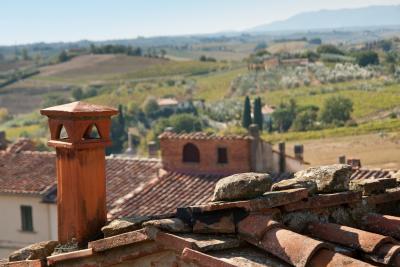
Tucked away between northern Tuscany, Liguria and Emilia-Romagna, it is usually overlooked by travel guides and rarely discovered by international property buyers. That is precisely why it remains much as many parts of Italy were thirty years ago: rugged, authentic, affordable and imbued with a tranquillity that has long since vanished from tourist-developed regions. Those who discover Lunigiana as property buyers often find something else too: that what they were looking for was not Tuscany, but what it once was. And that this Italy still exists – albeit not everywhere and probably not forever.
This article is a portrait of Lunigiana – its landscape, its history, its property market and its everyday life. It is aimed at people who want more than just a famous name on the letterhead of their dream property. Anyone wishing to understand the entire buying process in Italy will find all the steps in the guide: Buying a house in Italy.
Where is Lunigiana – and what exactly is it?
Lunigiana is not an administrative region in the Italian sense. It is a historical territory that today belongs mainly to the province of Massa-Carrara in Tuscany, with some parts extending into the Ligurian province of La Spezia. Its heart is the upper valley of the River Magra – a wide, green valley stretching from the Apennines to the Ligurian coast. The name derives from the town of Luni – once an important Roman colony at the mouth of the Magra, now a modest archaeological museum and a few ruins on the plain. In its heyday, Luni was one of the most important trading hubs for white Carrara marble – the stone from which Michelangelo carved his David and which is still quarried today in the hinterland.
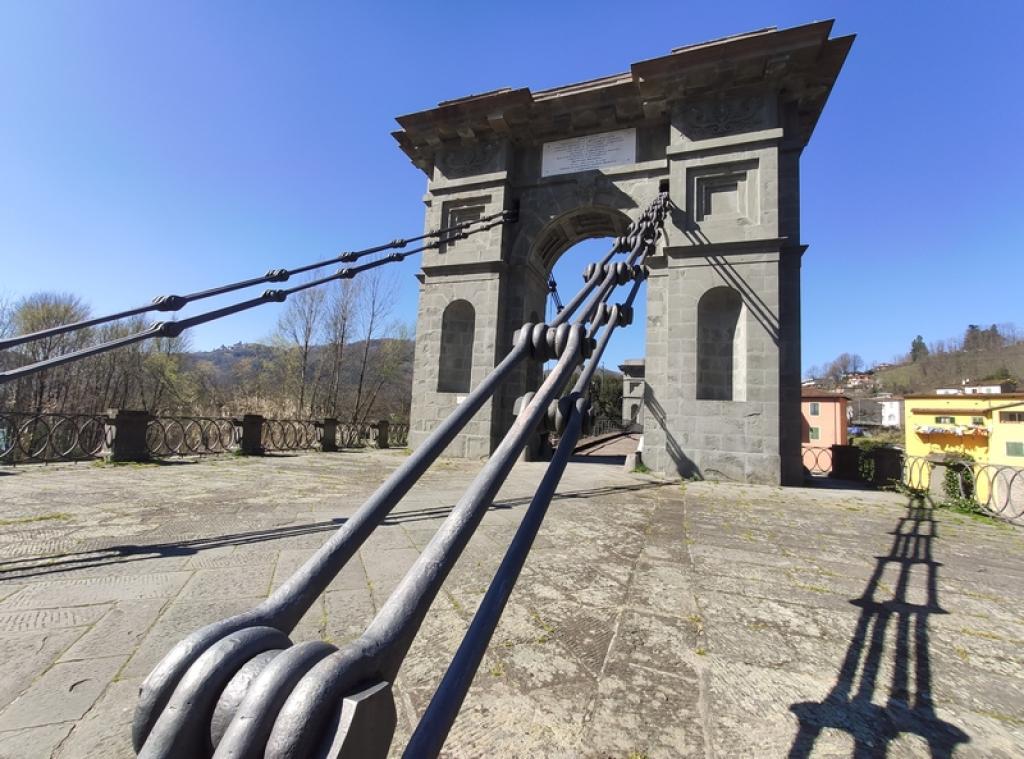
Geographically, Lunigiana lies at one of Italy’s oldest crossroads. This is where ancient trade routes converged, and where the medieval pilgrimage route, the Via Francigena, passed on its way from Canterbury to Rome. No fewer than 16 well-preserved castles and fortresses characterise the landscape – more than in any other region of comparable size in Italy. This density of medieval architecture is no coincidence: Lunigiana was a strategic no-man’s-land between competing powers, and every village built its own stronghold. Today, this history is the region’s greatest hidden asset – a backdrop of stone, forest and water that hardly anyone knows about and which has therefore not yet been developed for mass tourism.
The Lunigiana property market – prices, types, potential
Anyone seeing property listings in Lunigiana for the first time will rub their eyes in disbelief. What is on offer here for 80,000 or 150,000 euros – stone houses with thick walls, chestnut beams, a small garden and mountain views – would cost three to five times as much in the Chianti region. Sometimes more.
This is no coincidence, nor is it a hidden problem. It is the direct result of low international demand and demographic trends that have seen many villages depopulate over the past few decades. What is a demographic problem for the villages is an opportunity for property buyers – provided they assess it correctly.
Typical properties in Lunigiana:
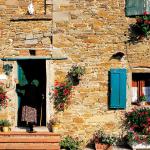
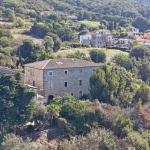
The most common properties on offer are stone houses in villages and hamlets – some renovated, some in need of renovation, almost always with a history that can be read from the walls. These houses are often multi-storey, narrow and deep, with small windows and thick external walls – a construction style that stays pleasantly cool in summer and is easy to heat in winter, provided the insulation is adequate.
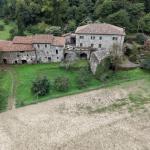
Casali and farmhouses on the outskirts of villages or standing alone in the countryside are the most sought-after properties for international buyers. They offer space, gardens and often outbuildings – and generally require more extensive renovation than townhouses.
Former monastery and church properties: Lunigiana has an unusually high concentration of former religious buildings that have passed into private ownership over the decades. If you are looking for a former monastery, a chapel or a rectory – Lunigiana offers properties of this kind at prices that would be unthinkable elsewhere.
Where in Lunigiana – an overview of the municipalities
Lunigiana comprises 14 municipalities spread along the Magra Valley and its side valleys. They are not all the same – there are clear differences in character, infrastructure and appeal to buyers.
Pontremoli is the centre – boasting the best infrastructure, the widest range of services and the liveliest old town. Anyone planning to make Lunigiana their main residence will find the most solid foundation for everyday life here. Property in Pontremoli’s old town is consequently more sought-after and more expensive than in the surrounding villages.
Filattiera, Villafranca in Lunigiana, Bagnone: These municipalities in the central Magratal offer an ideal blend of tranquillity and accessibility. The Via Francigena passes through all three; there is a good selection of farmhouses and stone-built houses, and prices are still significantly lower than in Pontremoli.
Zeri and Comano: The easternmost municipalities of Lunigiana, high in the Apennines, are for lovers of absolute tranquillity and mountain scenery. Infrastructure and winter access are the critical factors here – lovely in summer, challenging in winter.
Aulla: The southernmost and most easily accessible municipality – situated directly on the A15 motorway and at the railway junction. Those who need to commute regularly to La Spezia, Pisa or Milan appreciate Aulla as a base. The townscape is less picturesque than in other Lunigiana municipalities, but the surrounding area offers good locations.
Casola in Lunigiana: A little gem in a side valley, famous for the Marocca di Casola – a centuries-old chestnut bread that is now protected as a Slow Food Presidium. Casola is one of the villages in the region most affected by depopulation – and consequently offers affordable entry-level prices for buyers who prioritise character over comfort.
Daily life in Lunigiana – what life here really means
Lunigiana is not just a backdrop. Those who live here are part of a community that has its own rhythms – and which has come to accept the influx of international residents without particularly celebrating or fearing it.
The language: In Lunigiana, people speak Italian – with a distinct local dialect that is sometimes difficult even for other Italians to understand. Knowledge of English is rare outside Pontremoli. Those unwilling to learn Italian will never truly get to know the region. Those who do will be rewarded with a warmth that is often hidden behind professional hospitality in more tourist-oriented regions.
The community: The villages of Lunigiana have a strong local identity. Festivals, sagre (village fairs centred on local produce), religious holidays – community life is vibrant and welcomes new residents when they get involved. Many international buyers report that, after just a few years, they were better integrated into village life than they ever were in a major German city.
The seasons: Life in Lunigiana is strongly influenced by the seasons. Summer is bustling – with hikers, cyclists, bathers in the rivers, and families in holiday homes on the hills. Winter is quiet. Not deserted, but quiet. Anyone who appreciates this tranquillity will love it. Anyone in need of activity and variety should honestly consider whether Lunigiana can offer what they are looking for all year round.
Neighbours and integration: Over the past two decades, Lunigiana has seen a steady influx of Germans, Dutch, British and Swiss – not in the masses that characterise Tuscany, but enough to foster a small international community. This community is informal, not organised – but in a village where you bump into one another at the bakery, a network quickly forms.
Lunigiana as an investment – opportunities and a realistic assessment
The question of whether a property in Lunigiana a good investment is deserves an honest answer – and that answer is nuanced.
Potential for capital appreciation: Lunigiana has seen a noticeable increase in interest over the last five to eight years. Property portals catering to international buyers now list more properties than they did ten years ago, and demand from German-speaking countries has demonstrably risen. In prime locations – Pontremoli, Villafranca, Bagnone – moderate price increases can be observed. There is no guarantee of capital appreciation. Demographic trends – declining population figures in many municipalities – present a real headwind. Those speculating solely on capital returns would be better off in other regions. Those buying a property that also serves as their primary residence, or holiday home can take a more relaxed view of the investment aspect.
Rental potential: Lunigiana is not a traditional holiday rental destination – not yet at least. Anyone offering a charming, renovated casale on a platform such as Airbnb or Booking will certainly find tenants, particularly in summer and among hiking tourists. However, occupancy rates and achievable nightly rates are significantly below the levels seen in Tuscany’s major tourist hubs. Anyone buying the property primarily for rental purposes should examine the figures carefully.
The real investment: The most compelling answer to the question of investment is not a financial one. It is an investment in a quality of life that, in this form, is available in few other places in Europe at this price. The tranquillity, the natural surroundings, the cuisine, the history – these are Lunigiana’s greatest assets. And in an increasingly noisy world, their value is growing.
What to bear in mind when buying in Lunigiana
All the general steps in the buying process naturally apply to Lunigiana as well. In addition, there are a few region-specific aspects that deserve attention:
Building restrictions in mountain communities: Many municipalities in Lunigiana have strict zoning regulations concerning historic town centres and landscape conservation areas. Anyone buying a house in a borgo (historic village) and wishing to renovate it must be aware of the requirements set by the municipality and the Soprintendenza (the heritage protection authority). Facade colours, window sizes, roof tile types – even these are regulated in conservation areas.
Condition of older buildings: Many properties in Lunigiana have stood empty for years. This does not necessarily mean that they are structurally compromised – stone buildings are robust – but it does mean that damp, roof damage and outdated pipework are common issues. A structural survey by a local surveyor is particularly important before buying in Lunigiana.
Access and winter accessibility: For properties situated on slopes or away from main roads, the issue of access in winter is critical. Narrow local roads in the Lunigiana are not always cleared of snow. Anyone wishing to live there year-round should specifically check access during the cold season.
Water supply: In Lunigiana, many rural properties are connected to springs or cisterns rather than the municipal network. This is not uncommon and is not a problem – provided the spring has a good flow and is legally secured. Here too: check before buying.
Additional purchase costs: The rules described in our article on additional purchase costs remain unchanged. In Lunigiana, the cadastral value of properties is often particularly low – which further reduces the tax burden and makes the total purchase even more affordable than the already low purchase price would suggest.
Who is Lunigiana the right choice for?
Lunigiana is not for everyone. It is not for people looking for a well-known address, who would miss the amenities of a small town, or who need the social life of an international expat community. Nor is it the first choice for those focused purely on investment returns.
Lunigiana is the perfect choice for people seeking tranquillity without loneliness. For those who appreciate history as more than just a backdrop. For those willing to learn Italian – or who already speak it. For those who want a home that truly belongs to them, because it is part of a place that hasn’t yet been discovered by everyone.
It is the right choice for retired or early retired couples looking for a fresh start in an affordable, liveable environment. For families who want to give their children something other than party resorts and Instagram backdrops. For the self-employed and remote workers who need space, nature and tranquillity – and who know that you don’t need city noise to do good work. And it is the right choice for anyone who knows that feeling of driving through a region and thinking Here. Right here.
Conclusion – a region that waits
Lunigiana waits. Not impatiently – it has learnt to wait, over centuries. But it waits for people who take the time to really get to know it. People who don’t make up their minds on their first visit, but on their third or fourth – when the mist lies over the Apennines and the baker in Pontremoli already knows you want your bread without salt. Property in Lunigiana is still affordable. For now. The window of opportunity that was open in Tuscany thirty years ago is still open here – though not for much longer.